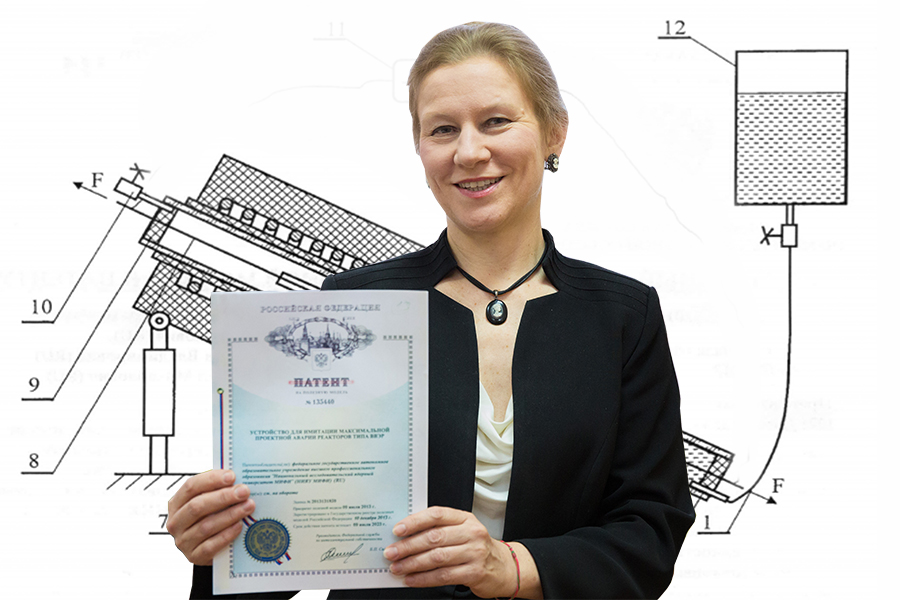
A unique miniature device for the research of properties and behavior of zirconium components of active zones of thermal- neutron WWER reactors in case of an emergency has been created in MEPhI.
The utility model worked out by MEPhI scientists tests materials and construction fragments of fuel assemblies of WWER type reactors in case of an emergency with the loss of heat carrier: design-basis accident and beyond design basis accident.
Svetlana Ivanova, Chief Expert at the Institute of Nuclear Industrial technology, the creator of the WWER reactor malfunction imitation device, claims:
-We’ve been working on the testing machine creation together with Belugin Ivan since the Fukushima disaster in 2011 which had happened because of zirconium-steam reaction. Atomic engineers all over the world started thinking of modifying the fuel construction to eliminate such situations in future. As a result, the Advanced Tolerant Fuel (ATF) concept has appeared.
Our main aim was finding ways to raise operational characteristics and operating capacity of zirconium components of active zones not only under normal operations but in emergency cases as well; make zirconium materials with an increased level of properties and increase the reliability of the zirconium components of fuel reactors in emergency cases by putting special protection cover on them. This is a world tendency.
Thermal-neutron reactors are one of the main reactors working not only in Russia but in Finland, Slovenia, Ukraine, China, India etc.
MEPhI scientists have worked out a miniature (microwave oven-size), convenient in use device for reactor malfunction imitation under huge leakings and bursts of main circulating pipes of the primary circuit of WWER reactor with dehydration of active zones and fuel rising up to 1100 -1200 °С. The device can represent the 1st and 2nd stages of design-basis accidents and the heat pulse.