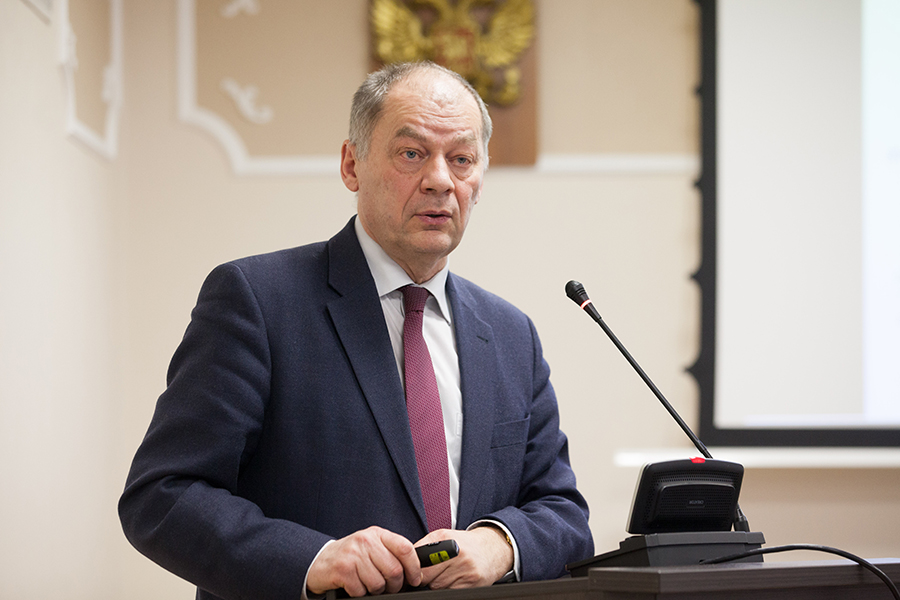
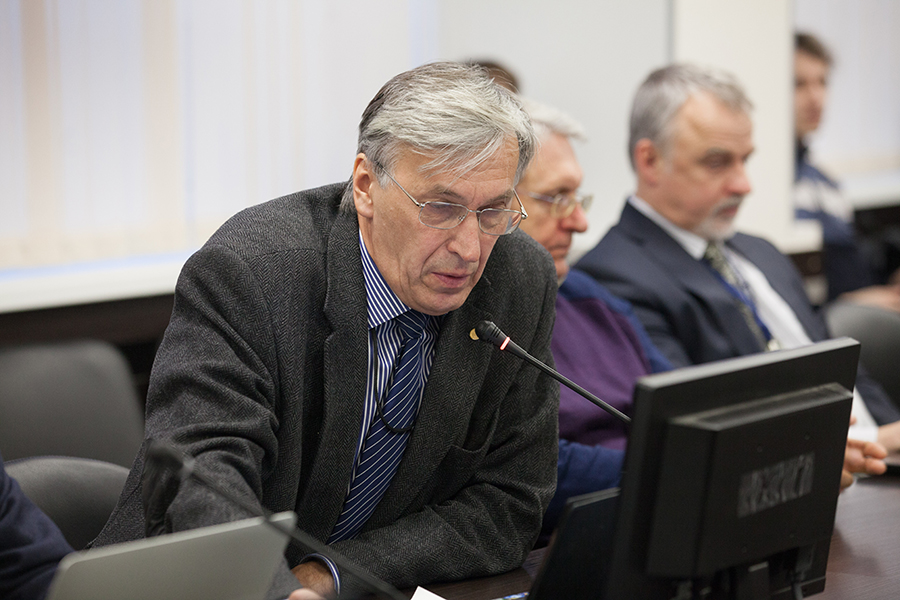
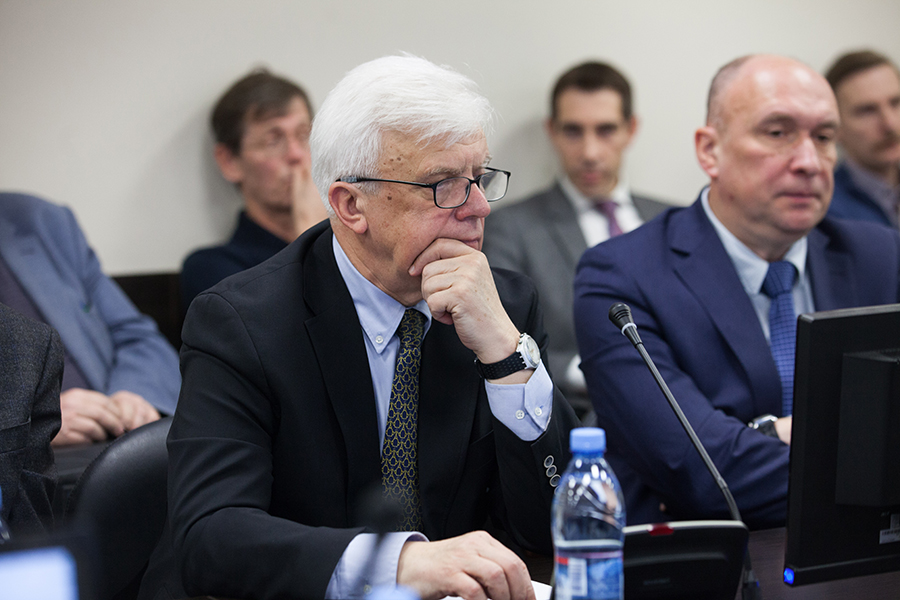
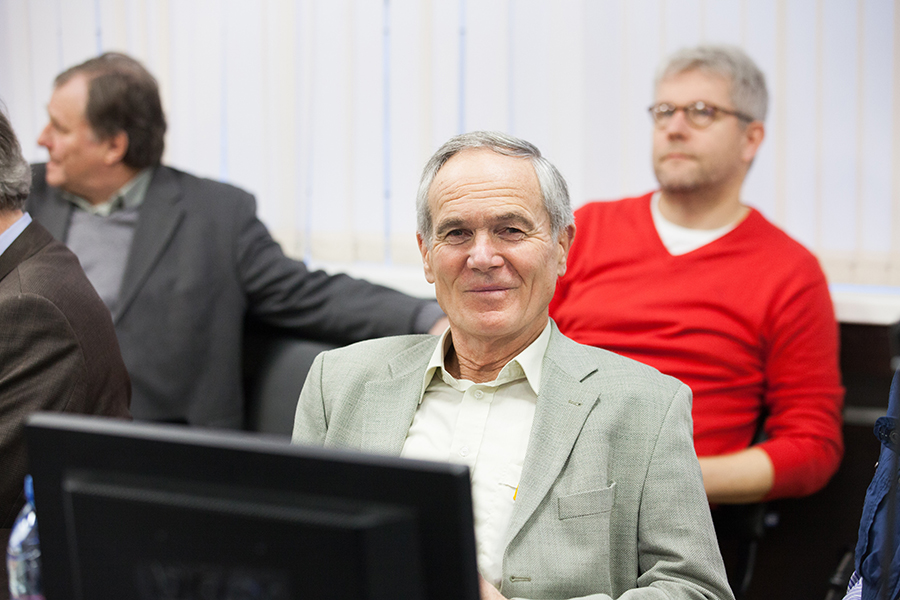
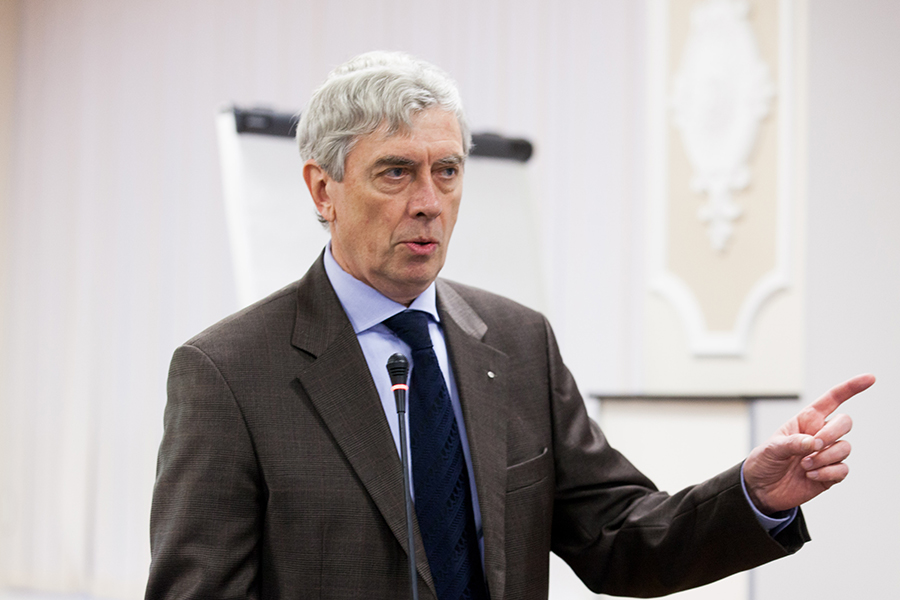
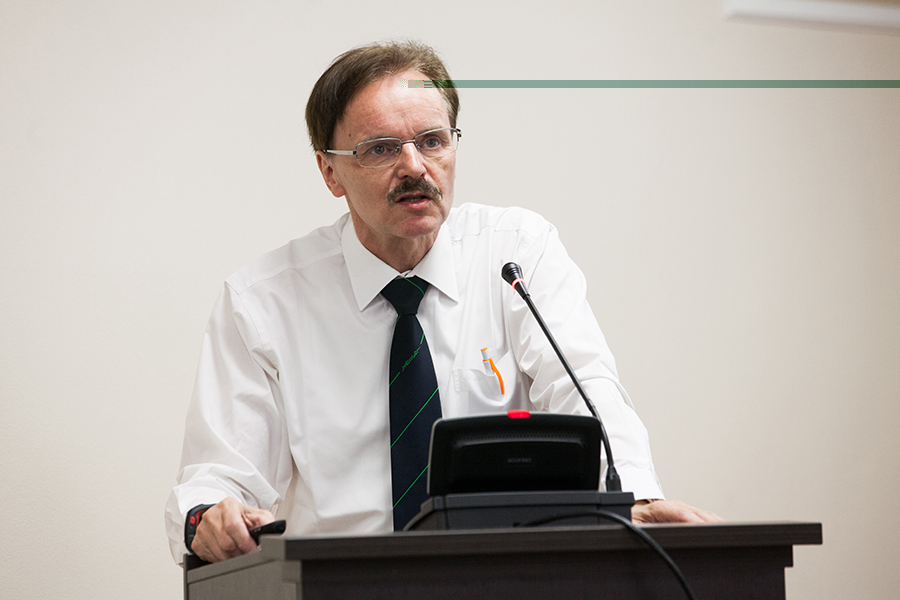
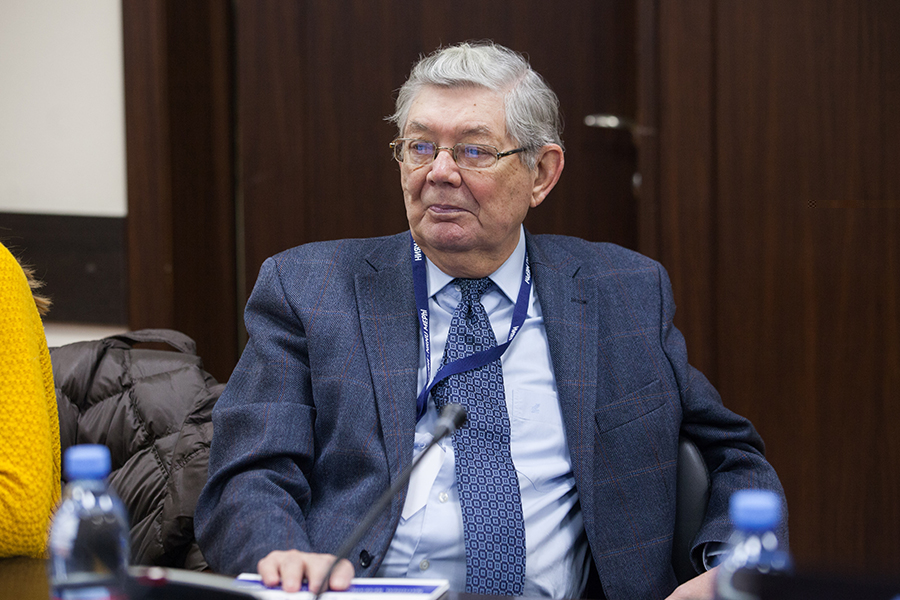
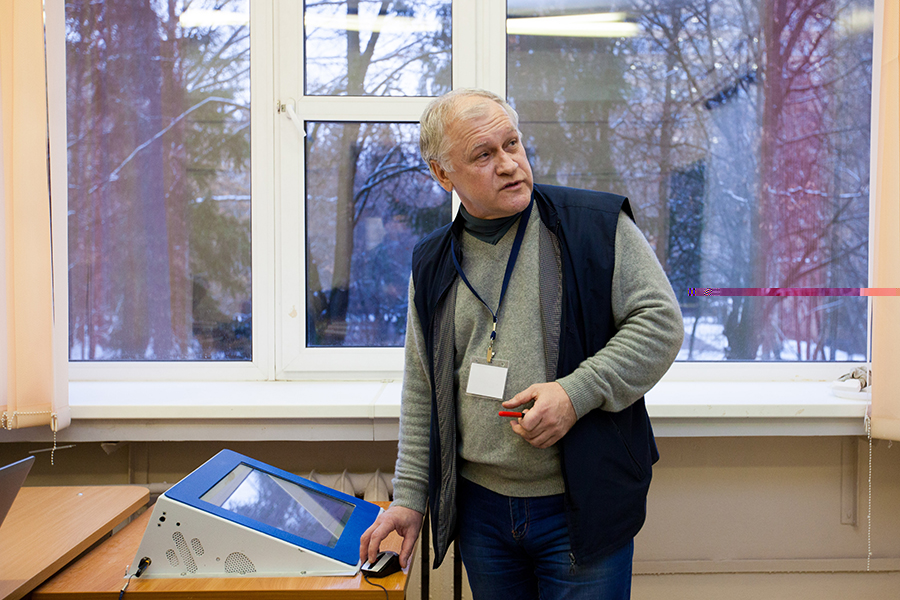
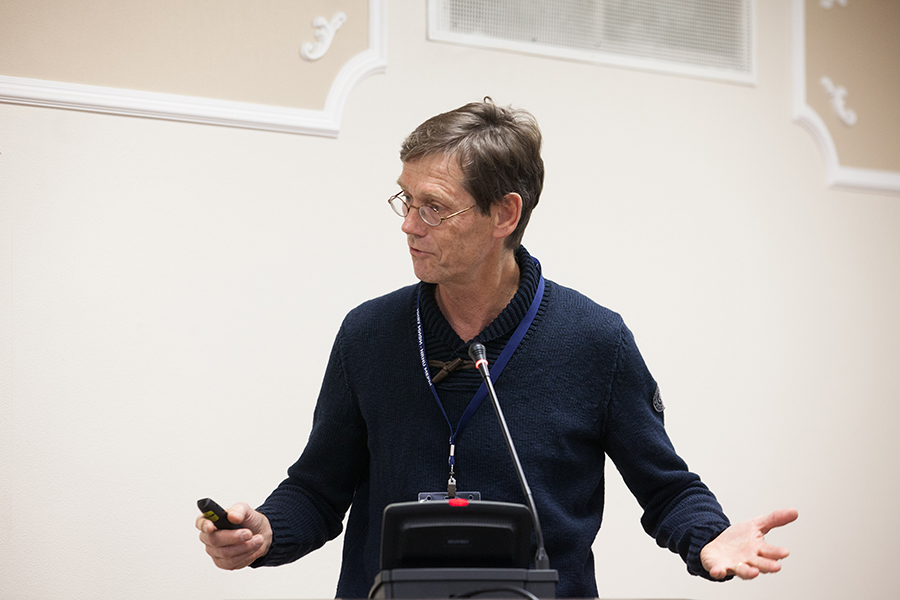
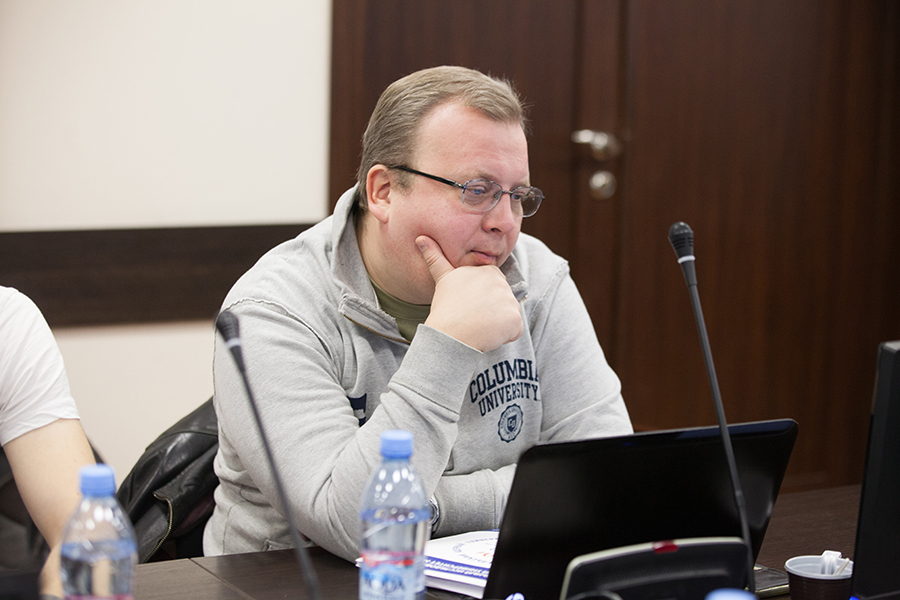
On 24 and 25 November MEPhI has held an international scientific seminar on “Challenges and opportunities at FAIR and NICA”. It was the second such seminar held in the University (the first forum was held in October of this year). Once again it united heads and key experts of international megascience projects, scientists, teachers, and future professionals – students and postgraduates of the University in one place.
The seminar was opened by the rector of MEPhI M.N. Strikhanov. He welcomed prominent scientists and researchers who came to the University that day and wished them successful work. Welcoming remarks were made by the co-Director of the Research center FAIR-Russia, Professor Hans Gutbrod and the Scientific Director of the International Facility for Antiproton and Ion Research (FAIR), Professor of MEPhI Boris Sharkov.
The main goal of the seminar was to increase the strength of MEPhI collaborations in international projects, especially in the FAIR and NICA – identified Professor Hans Gutbrod. “The faculty of the University should not only teach students, but also actively participate in scientific research of high level. It is also necessary to invite outstanding scientists from third parties to read lectures both for teachers and young scientists of MEPhI. Participation of students and postgraduates in international research projects is a great encouragement for their professional development”, said the Scientific Director of FAIR.
Each of two days of the workshop started with the lectures of invited experts, after which work was continued in parallel sessions on the following topics: NUSTAR Low Energy; NN collisions at NICA and Nuklotron; Theory NN collisions at GSI, FAIR and NICA; APPA; CBM at FAIR, BM@N, MPD at NICA; Biomed; Computing.
The meetings not only discussed the main topics, but also developed new projects in the sphere of science and education. Later, the leaders of the parallel sessions presented results of a collective discussion, possible directions of work in the University and necessary steps to implement them.