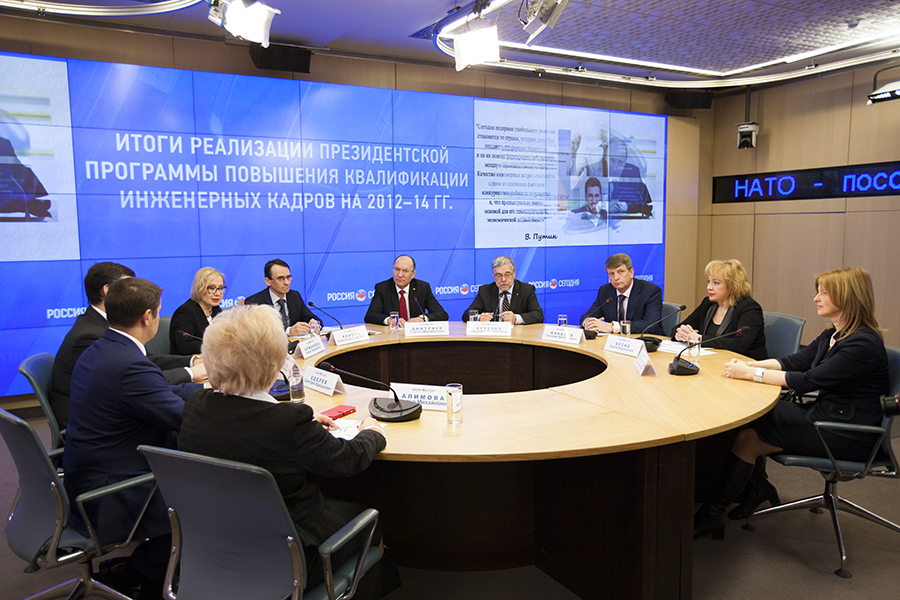
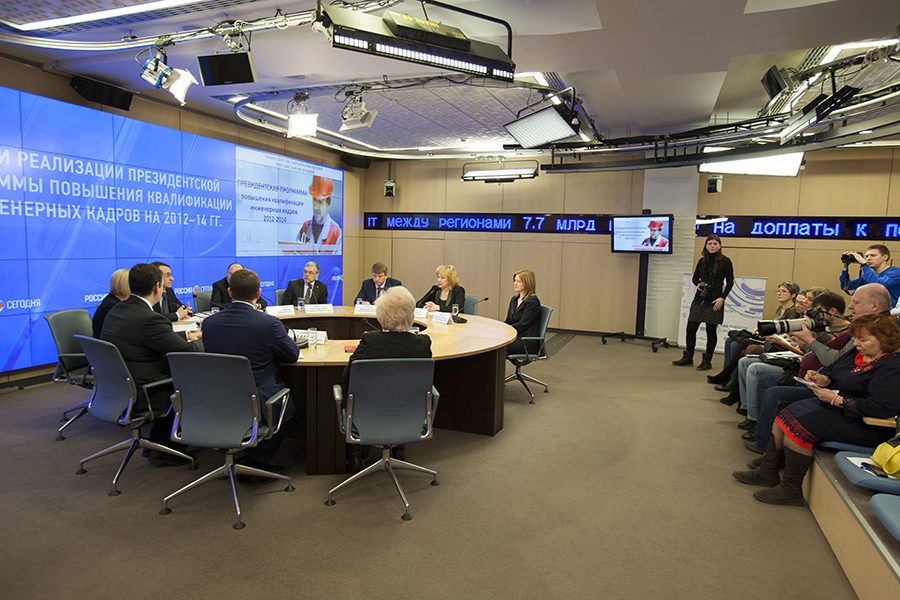
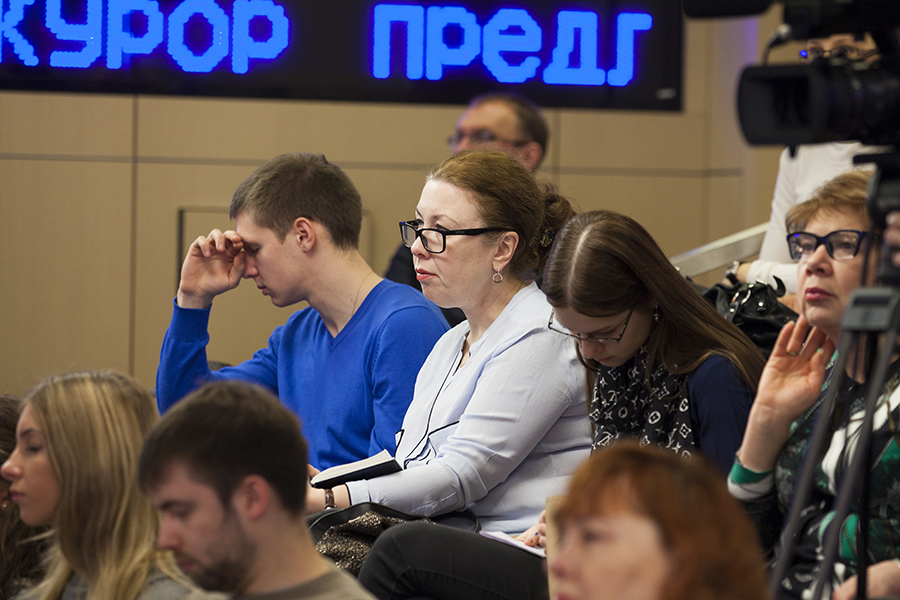
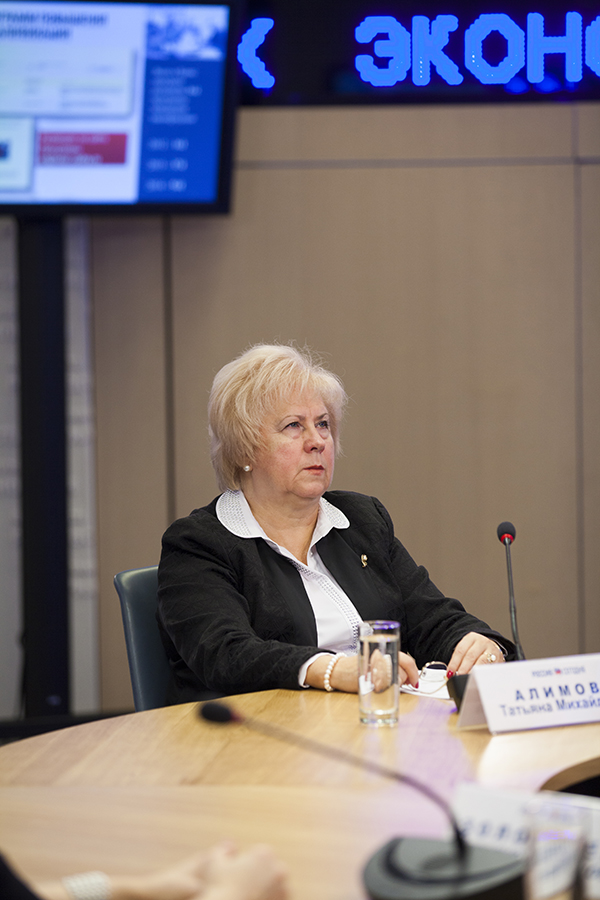
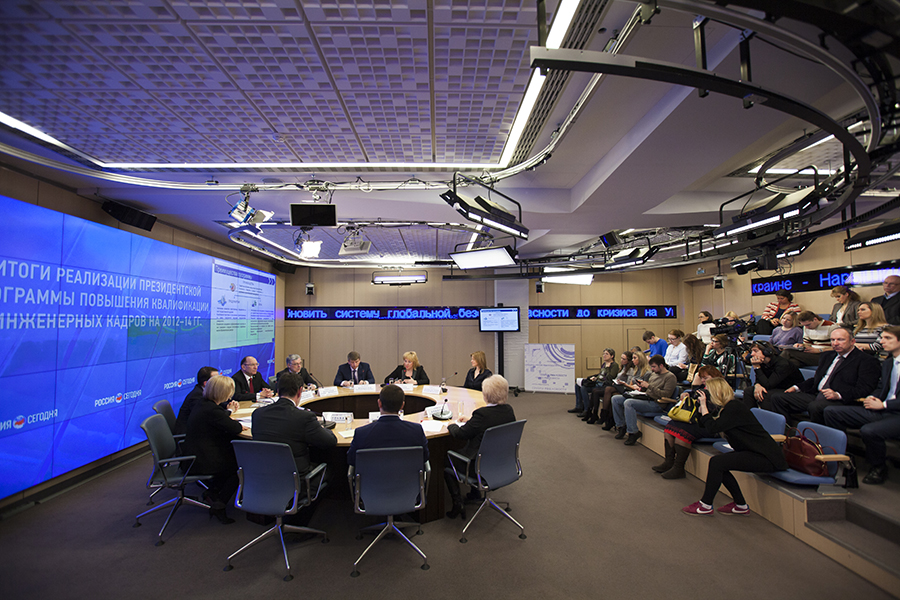
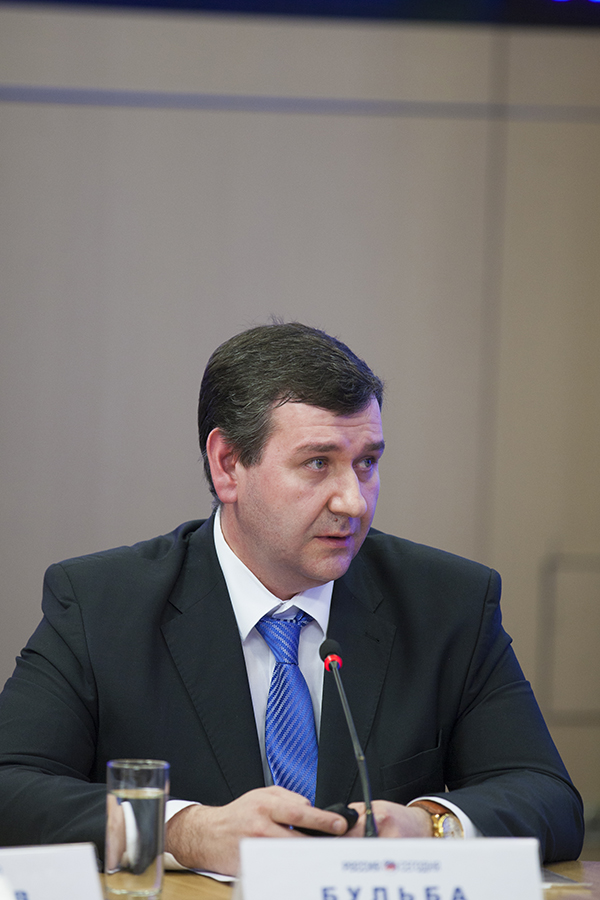
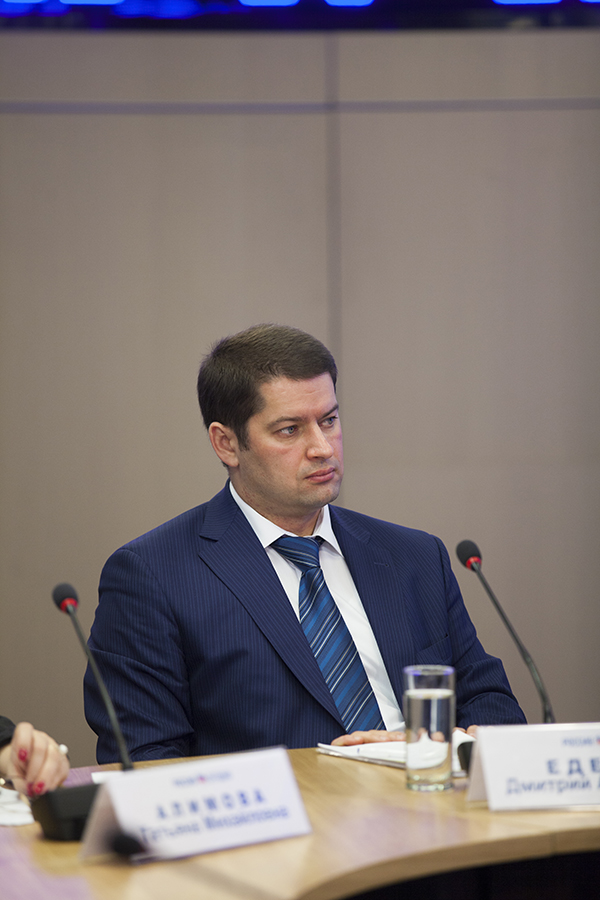
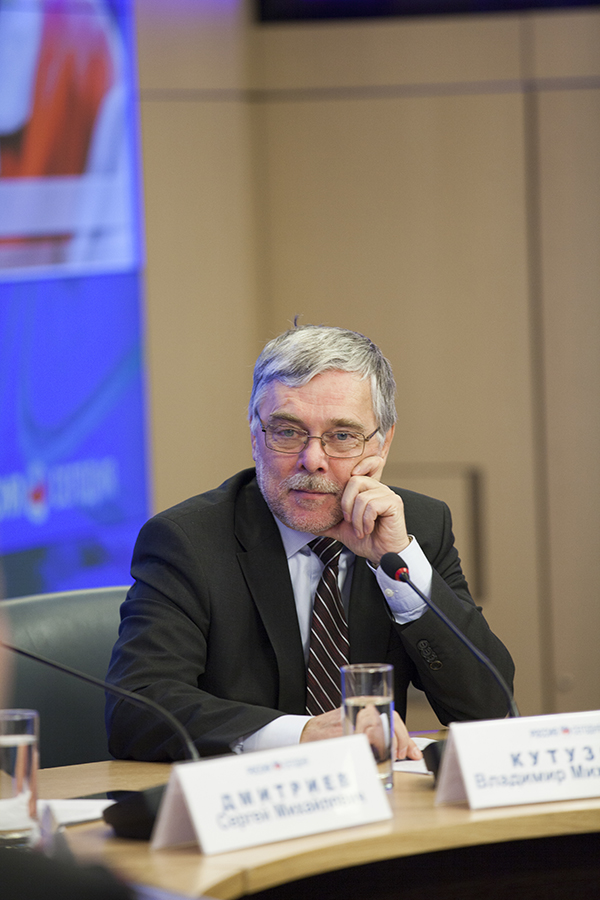
On February 5 “Russia today” has held a media conference dedicated to the results of the Presidential program of advanced training of engineers for 2012 - 2014.
The press conference was attended by representatives of the Ministry of Education and Science of the Russian Federation and the Russian technical universities such as National Research Nuclear University “MEPhI”, Saint Petersburg Electrotechnical University “LETI”, Nizhny Novgorod State Technical University (NNSTU), Moscow Automobile and Road Construction University (MADI), Moscow State University of Food Production, as well as a representative of the employer – Arseniev Aviation Company “Progress”.
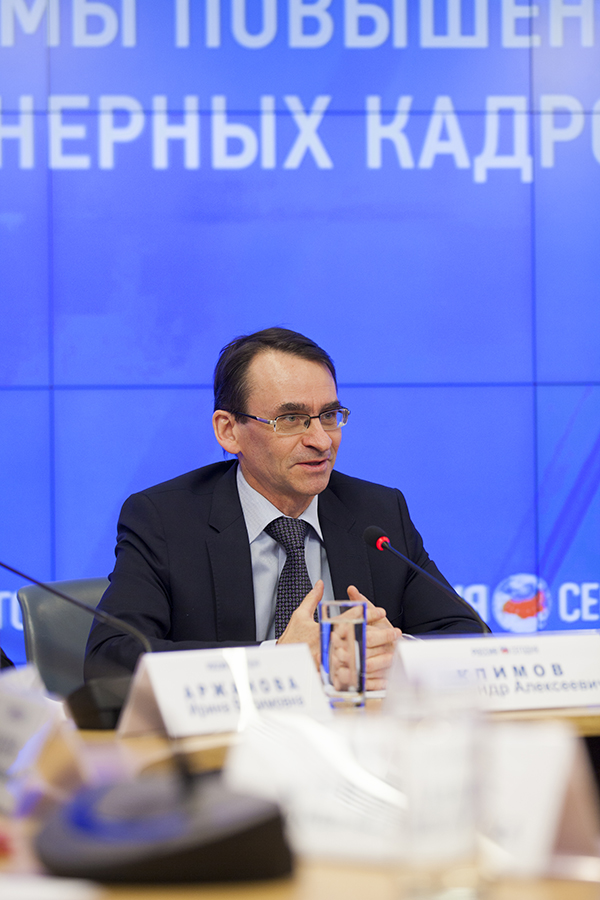
The round table was opened by the Deputy Minister of Education and Science A. Klimov. He said that the Presidential program of engineers training had three key features. First, it is an advanced training of young people, which have just came to enterprises of high-tech production; secondly, it is a possibility of internships, both in Russia and in leading international engineering and technology centers; thirdly, not only public educational institutions but private one has the opportunity to participate in the program. During the three years of the program implementation it has proven its usefulness and success, and its targets were even exceeded.
Summarizing the project implementation, the Executive Director of the National Training Fund I. Arzhanova reported that within three years more than 16 thousand engineering specialists were trained in the framework of the Presidential program. More than five thousand of them were trained in enterprises and engineering centers in Russia, more than two thousand – abroad. 96 educational organizations were program participants, and 1261 companies of the real economy were its customers.
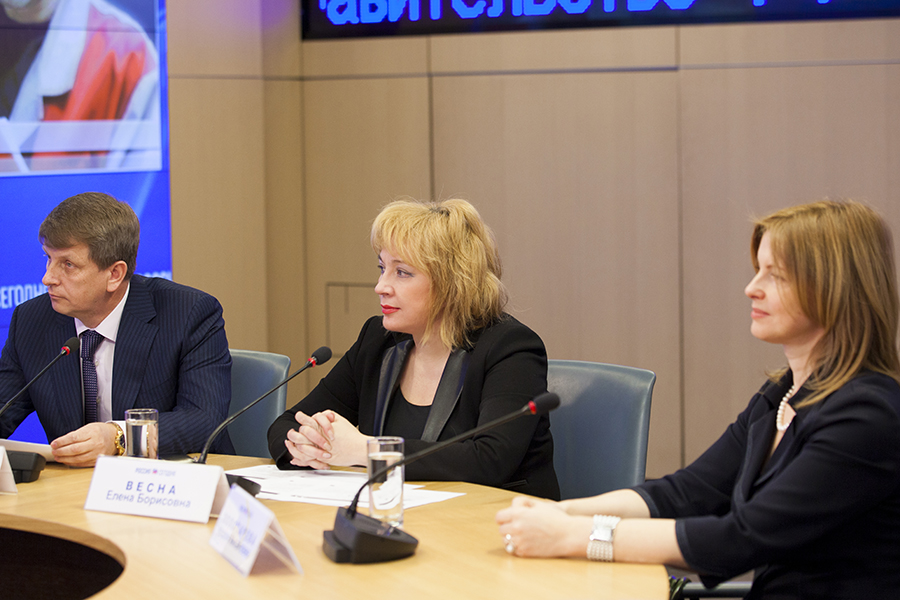
MEPhI Vice-rector on educational and methodical work E. Vesna told that the University has already closely worked with employers, primarily with enterprises of the SC “Rosatom”. The collaborative mechanisms are different. For example, the University is a member of the National nuclear innovation consortium, which together with employers participates in the development of professional standards for specialists of the nuclear industry, modernization of educational programs, introduction of a certification system of graduates’ qualifications. Nevertheless, the program has opened new opportunities for the University to have a dialogue with companies. A great advantage of the program is that during this interaction universities became able to explicitly formulate what areas of training are in demand now and which competencies are in need of the customer. “It is one thing to discuss this issue in theory but quite another when an employer puts a specific task and clearly says what specialist he need”, - said E. Vesna.
For three years MEPhI has implemented 34 programs, prepared 620 specialists for large nuclear centers and enterprises of the nuclear weapons complex and other industries. “Our customers are of great importance; their trust in our University confirms one more time that the program of advanced training of engineers is very topical, necessary and important”, said MEPhI Vice-rector.
Foreign training in the framework of the program was called as a significant advantage. “Our faculty has established strong ties in the world scientific centers; new opportunities were created for MEPhI, which participates in the Program of competitiveness increase,” said E. Vesna.
During the implementation of the Presidential program, MEPhI had accumulated significant experience, which subsequently was used in the creation of its basic educational programs that now can compete on the global education market. So in 2014 the University developed 7 new programs of double degree and 25 joint programmes, which provide mutual recognition of credits with key partner Universities and leading universities of the world.
Summing up the discussions, the Deputy Minister of Education and Science A. Klimov said that the Presidential program of advanced training of engineers has made a significant contribution to the formation of modern approaches to the development of professional skills and competencies of engineering specialists. “I want to stress once more that the aim of the program is to improve skills of engineers, primarily from high-tech sectors of Russian economy. It seems to me that together we have coped with the first stage of this task. I think we need to extend this program not for two years, as previously was planned, but up to 2020. It is impossible to achieve any results without interaction with the real production,” concluded A. A. Klimov.