Pyotr Borisuk – on ultra‑precise thorium watches
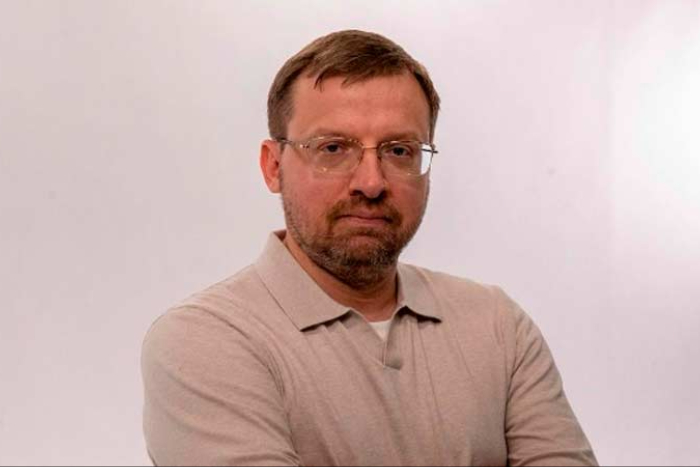
At MEPhI, they are working on creating ultra‑precise thorium clocks. What progress has been made and why this is necessary is explained by Pyotr Borisuk, head of the Project Office of the Quantum University and head of the Department of Quantum Metrology at the Institute of Laser and Plasma Technologies of MEPhI.
– Creating atomic clocks based on the thorium‑229 isotope is a global trend. What is our country’s place in this?
– Our country does not want to be left behind in this. The Russian experimental thorium project was launched back in 2012 under the leadership of Viktor Ivanovich Troyan, a professor at MEPhI, and the idea of using nuclear transition for quantum metrology itself belongs to the Russian theoretical physicist Evgeny Viktorovich Tkala.
– How does this technology work?
– Atomic clocks use transitions between atomic levels. In fact, we’re talking about an atom moving from the ground state to an excited state. The energy difference between these states determines the value of the resonant frequency of the “clock” transition. Moreover, if we tune the laser source to this frequency and stabilize it using this transition, we get a laser source with the wavelength of the “clock” atomic transition, which is nothing more than a standard with a known wavelength and frequency. The better scientists understand the atomic transition, the more accurately they will be able to stabilize laser radiation and the better they will be able to determine the frequency of the “clock” transition.
– Is there a limit to such precision?
- Yes. Currently, atomic clocks have already reached their limit, which lies in the range of 10–19 relative units, where it is possible to measure a second up to the 18th–19th decimal place. It is believed that nuclear clocks will make it possible to stabilize the wavelength even better, as they are less susceptible to external influences from electromagnetic fields, which means they will be more accurate.
– What is the difference between atomic and nuclear clocks?
– This is the same transition between the ground state and the excited state as in the case of atomic clocks, but in this case, it is the nucleus that transitions from the ground state to the excited, anomalously low‑lying isomeric state. Only the thorium‑229 isotope has such a unique low‑lying nuclear state. This isotope is of artificial origin; it is produced through the alpha decay of uranium‑233, which was produced in the past as part of the Soviet atomic project.
– Why is thorium specifically used to create nuclear clocks?
– The unique feature that distinguishes thorium‑229 from other radionuclides and their nuclei is its anomalously low‑lying isomeric nuclear state. All other nuclear states can have energies reaching tens of kilo- and mega-electron volts, while the thorium isotope has a state whose energy, according to the latest data, is 8.4 electron volts. In other words, the energy of this nuclear transition is accessible for spectroscopy using existing laser sources, and this is necessary to stabilize the laser source based on the nuclear transition. Publications over the past two years have shown that direct spectroscopy of the nuclear state makes it possible to create a nuclear clock. This has been demonstrated in recent experiments.
– What are such precise clocks needed for?
– Thanks to them, humanity gains a new quantum sensor that allows us to measure, for example, changes in the parameters of Earth’s rotation, external electromagnetic fields, and the gravitational field. Such clocks, in the long term, make it possible to test the hypothesis about the drift of fundamental constants, and they can also be used to search for dark matter and to study the cosmological effects of the general theory of relativity. This is a completely new set of tools that will take humanity to a new level of understanding of the world we live in.
– So, is this only needed for fundamental research?
– From the perspective of practical applications, it’s hard to say exactly what such watches will provide, but the possibilities are limitless. This includes positioning, remote geological exploration, navigation, a data transmission system, a synchronization system, and much, much more.
– Some of your colleagues say that time is a kind of conventional, abstract concept invented by humans. But you, on the contrary, try to measure it in the most precise way possible. Who is right?
– We work very closely with the All‑Russian Research Institute of Physical, Technical and Radio Engineering Measurements, which carries out the functions of the State Service of Time and Frequency of the Russian Federation. There, the standard and the state standard of time and frequency are stored. With the participation of leading scientific schools in the field of quantum metrology, a state standard for measuring time and frequency was developed. This is a document that allows for the standardization of methods and approaches in the field of time and frequency measurement. Interestingly, this document does not provide a definition of the measured quantity itself — time. That is, it does not specify what time is and what frequency is. In this sense, this point of view held by scientists in the field of quantum metrology is valid. At the same time, an ordinary person might say that time does not exist, because no one knows what it is, since the physical meaning of this quantity is not defined. Nevertheless, events do unfold, one event follows another, and it is possible to условно attach some kind of scale to these events and say that there is a certain unit interval, which we can call a second, and a set of such seconds, attached to a scale, can be called time.
– There’s a well‑known saying – “happy people don’t watch the clock.” What do you think about that?
– I’m a happy person because I’m doing what I love, namely science.
– Despite the fact that you’re trying to observe time?
– Precisely because, among other things, I’m dealing with time. And the group of young people who are working with me on this task — including postgraduate students, candidates of sciences, and students — are working enthusiastically, with dedication; they’re immersed in the work. So, it’s all worth it.
– MEPhI, as part of the Priority 2030 program, supported a project aimed at freezing thorium atoms. Does this have anything to do with nuclear clocks?
– Indirectly. Our Chinese colleagues have published several papers in which they showed that there are positive ions, neutral atoms, and negative ions. A neutral atom has such a concept as electron affinity. That is, each atom can, with some degree of probability, accept an electron. Thus, an ion with a negative charge appears. With a single negative charge, it is a thorium‑232 anion. It is believed that this anion is the most promising among all anions that are currently being studied in terms of its laser cooling and spectroscopy in a Paul trap. This is a tool that is used both for quantum metrology — in particular, for quantum clocks — and for the creation of ion‑based quantum computers.
– But why thorium again?
– It’s such an amazing coincidence. Within the framework of developing the scientific topics at the National Center for Physics and Mathematics, thanks to Academician Alexander Mikhailovich Sergeev, we were offered to continue experiments with laser cooling of thorium3+ ions for nuclear clocks. On the existing Paul trap, it is possible to upgrade the recording system and detect particles of various charge states. And then, during the research, it turned out that thorium can also be used to create an ion quantum computer based on thorium anions. We began to develop this topic. As a result, the possibility of creating a quantum computer based specifically on thorium anions is now being considered hypothetically. So, the potential of these technologies is enormous, and working with them is incredibly interesting.