On October 5, “Nobel Week” begins. The Nobel Committee in Stockholm will start announcing the 2026 Nobel Prize laureates. Below, we publish an extensive opinion from Anastasia Ponamareva, acting head of the Department of International Relations at the Institute of International Relations at MEPhI, on the situation surrounding the Nobel Peace Prize — the most politicized of the Nobel Prizes.
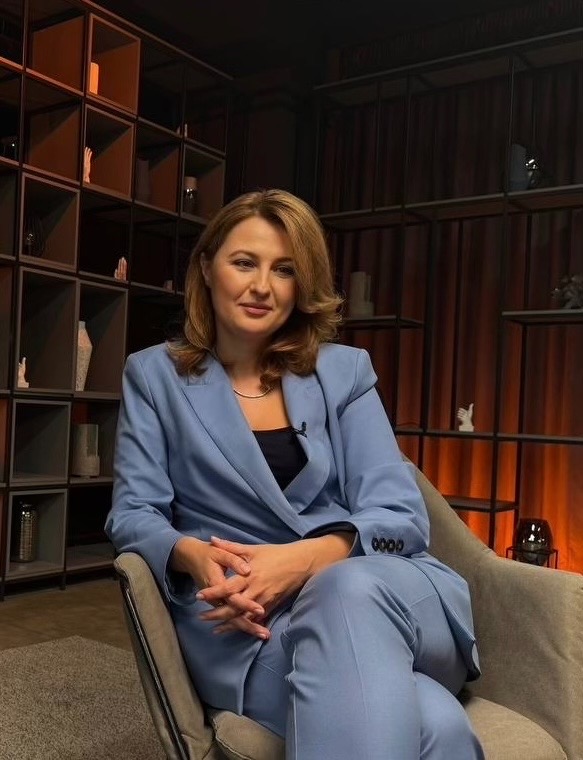
This year, 287 candidates were nominated for the Peace Prize, including 79 organizations. And this is the only thing that has been officially confirmed, since, according to the Nobel Committee’s rules, the lists of nominees are not disclosed until 50 years after the awards are presented. Even when the leaders of Israel, Cambodia, and Pakistan publicly stated that they had nominated Donald Trump, the committee’s secretary, Kristian Berg Harpviken, neither confirmed nor denied this information. So, trying to answer the question about the most likely winner is akin to fortune‑telling with coffee grounds, only instead of looking at the patterns in the bottom of the cup, we’re examining the quotes from betting companies. Moreover, the information from the traditional leaders in this field — the British Ladbrokes and William Hill, which have been shaping the “favourite grid” for decades — is not enough to track the topic in real time. And we have to supplement the analysis with data from prediction markets, namely Kalshi and Polymarket.
Kalshi is an American regulated platform for betting on events, operating in US dollars. The top picks there include Canadian Prime Minister Mark Carney (5%) [1], Sudan's Emergency Response Rooms (14%), and Doctors Without Borders (11%). Polymarket is a global blockchain platform that operates in cryptocurrency. As of September, the leaders there are Yulia Navalnaya (7.5–8%), Volodymyr Zelenskyy (about 3%), and Trump (about 1.5–2%). The obvious discrepancy in the lists is due to the specific nature of the two event exchanges themselves. The Polymarket audience is international and places bets on figures with worldwide recognition. Bets on Kalshi reflect the information environment of American traders. Overall, markets traditionally react to the most prominent names in world politics, but the committee should assess contribution, not popularity.
The most appropriate candidate (from the perspective of the letter of Alfred Nobel’s will — “brotherhood between peoples, reduction of standing armies and promotion of peace”) appears to be Sudan’s Emergency Response Rooms — a decentralized network of local civic initiatives that emerged in response to the humanitarian catastrophe in Sudan. This is not an organization with a multimillion‑dollar budget, but an association of volunteers who, in the context of one of the most brutal civil wars of our time, are doing what international institutions have failed to do: feeding the hungry, evacuating the wounded, and restoring infrastructure. Doctors Without Borders also remains one of the main humanitarian players, but they already received the Nobel Peace Prize in 1999. Trump was a favorite on William Hill for a long time, but after the start of the US and Israel’s military operation against Iran, his rating on prediction markets dropped.
Unfortunately, at present, the Peace Prize is increasingly failing to live up to its original intent. This crisis of legitimacy is largely the result of political games played by the Nobel Committee, whose judges, appointed by the parliament of Norway—a NATO member country—have often been guided in their decisions by the logic of bloc discipline rather than by the spirit of Alfred Nobel’s will.
It is noteworthy that Venezuelan opposition figure María Corina Machado, who received the award in 2025 “for her tireless work to promote the democratic rights” of the country’s people and her struggle “to achieve a fair and peaceful transition from dictatorship to democracy,” openly supported the US’s aggressive policy towards her own country, including military pressure and sanctions. Her attempt to “gift” the Nobel Prize to Donald Trump contributed to the decline in the prestige of this award.
However, criticism of the committee’s decisions began long before 2025. In particular, the awarding of the Peace Prize to Barack Obama in 2009, just nine months after his inauguration, was perceived by many as an advance rather than a recognition of real merits: at the time of the award, the United States was continuing military operations in Afghanistan and Iraq. The most controversial decision remains the awarding of Henry Kissinger and Le Duc Tho in 1973: the laureate from North Vietnam refused the prize, stating that “peace has not been truly established”; two members of the Nobel Committee resigned in protest; and Kissinger did not go to Oslo out of fear of demonstrations.
Today, some experts and officials from countries of the Global South often draw a direct parallel between the committee’s choice and the foreign policy interests of the collective West. As Cuba’s Foreign Minister Bruno Rodríguez put it figuratively in 2025, the Nobel Peace Prize is turning into an incentive “for obedient US allies and a platform for attacking governments that are inconvenient for the US.” Until this system changes, it will reflect not the values inherent in the award’s name, but the prevailing circumstances of the moment.
Perhaps the most paradoxical, yet also the most honest, course of action under the current circumstances would be to refrain from awarding the prize altogether in 2026. In 1914–1918 and 1939–1945, the committee refrained from giving awards because the very idea of peace seemed inappropriate against the backdrop of total conflict. Today’s indicators — 61 conflicts, record‑high military spending, the expired START‑III treaty, and the Doomsday Clock set at 85 seconds — essentially provide no less reason for a similar decision.
[1] Here and below: the statistical indicators are provided as of the evening of September 28. Quotes can change dramatically within a single day.