Specialists at the National Research Nuclear University MEPhI have developed an algorithm that combines ordinary mobile devices into a high‑performance computing cluster. According to the developers, this solution can make cloud technologies accessible to everyone.
In the era of big data and artificial intelligence, the problem of computing power is particularly acute. Supercomputers and cloud servers require huge financial investments, which makes them inaccessible to many universities and small businesses.
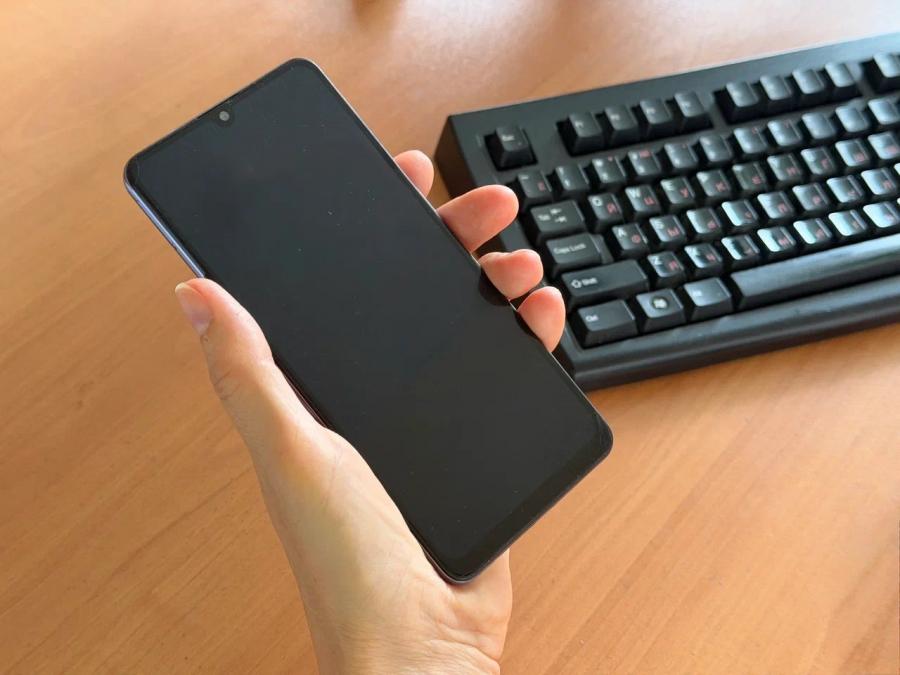
Scientists at MEPhI proposed using ordinary smartphones for complex scientific calculations, combining them into powerful distributed computing systems capable of competing in terms of performance with full‑fledged servers.
The idea of creating computing clusters from mobile devices is not new. The first experiments were conducted 15 years ago. The authors managed to solve the main problem of such systems — the heterogeneity of devices. In one network, you can find a powerful flagship smartphone and a budget model, the performance of which differs by 10–12 times. In addition, during prolonged operation, powerful smartphones overheat and reduce their frequency (throttling), losing up to 60 % of their performance. It’s simply impossible to break the task down into equal parts in such a “heterogeneous” crowd — powerful nodes sit idle while waiting for the weaker ones. Traditional load‑balancing methods either ignore the actual state of the devices or work only in stable wired networks.
Scientists have developed a combined algorithm that works like a “smart” dispatcher. Before starting the calculations, the system assesses the peak power of each device based on the number of cores and their frequency. But this is just the starting point. During operation, each node constantly “complains” to the control node about the temperature, current frequency, and load. Based on this data, the algorithm adjusts in real time how much computing load to assign to each smartphone.
“If the phone starts to overheat, the system automatically offloads some tasks from it, preventing the processor from throttling. And when it cools down, it returns the load,” explain the authors, Associate Professor Galina Isaeva from MEPhI and graduate student Fyodor Isaev.
An important parameter of the system is its built‑in fault tolerance. In a wireless network, nodes are constantly disconnecting — someone ends up out of range, someone’s battery runs out. In such cases, the algorithm instantly returns unfinished subtasks back to the general queue and redistributes them among the working smartphones.
For the test, the scientists used a numerical integration problem — a complex function requiring about a billion computation steps. Different approaches were compared. Static balancing (based on peak frequency) showed performance on par with a desktop PC, but under prolonged load, it “drifted” — throttling nullified all the advantages.
The authors’ own combined method, GRID, demonstrated impressive results: the execution time was reduced by 2.5 times compared to static execution for long‑running tasks, and the load dispersion (the variation in execution time across different nodes) turned out to be minimal. This means that the cluster operated as a single well‑coordinated mechanism, with no node sitting idle or overheating.
Scientists note that so far they have only created a prototype, but the development has enormous potential. It paves the way for creating affordable mobile computing farms for research groups, educational institutions, and even for emergency services in field conditions where there is no access to the internet and servers. Researchers plan to continue working on improving energy efficiency and adapting the technology to real‑world scenarios so that cloud technologies become truly accessible to everyone.