Researchers from the National Research Nuclear University "MEPhI" have studied the properties of a unique two-dimensional material — diamane. According to the authors, the results obtained open the way to the creation of hybrid materials for nanoelectronics of the future.
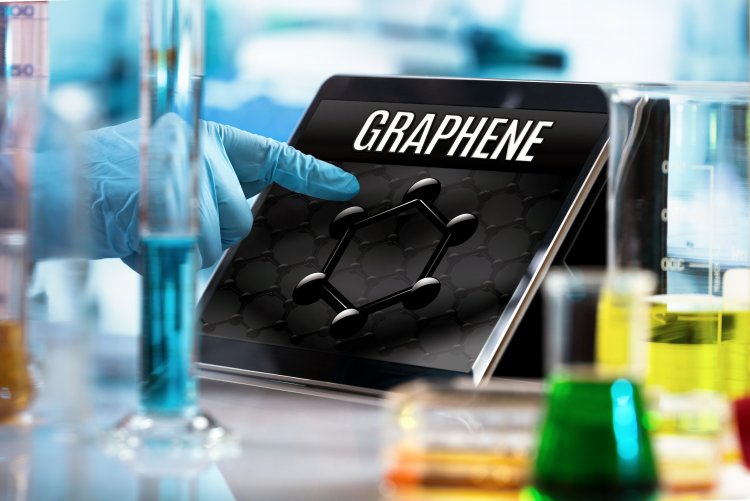
Diamane is essentially a "two-dimensional diamond". Its structure consists of two graphene layers interconnected by strong chemical bonds, as in ordinary diamond. This gives the material outstanding hardness and unique electronic properties, including a wide band gap, making it an ideal dielectric for ultrathin electronics.
However, the question of what happens to diamane when heated has remained open until now. MEPhI scientists have traced this process in great detail using sophisticated computer modeling. It turned out that everything starts with the separation of one hydrogen atom from the surface of the material. This process requires significant energy – 2.59 electron volts, which explains the high thermal stability of diamane.
But the most interesting thing happens next. As soon as one hydrogen atom leaves its place, the process becomes irreversible. The resulting "vacancy" creates a stress zone that provokes the separation of a neighboring hydrogen atom, but from the opposite side of the carbon "sandwich". This is how "divacancy" is formed — a kind of catalyst for further degradation of the material.
"We found that after the formation of divacancy, a chain reaction begins. The hydrogen atoms near this defect begin to leave their places one by one, and the area of "dehydration" grows like a snowball," the scientists said.
In these dehydrated regions, the interlayer diamond bonds between the graphene layers are broken, and the material turns into ordinary dielectric graphene. At the same time, the surrounding areas where hydrogen is stored continue to remain diamane. This creates a nanostructure within a single material that combines conductive and dielectric properties.
The culmination of the study was the determination of the minimum size of a stable "island" of diamane. Scientists have found that only 8 hydrogen atoms are enough to preserve diamond properties. According to the authors of the article, such a nanoscale domain, with a diameter of only 0.3 nanometers, can serve as a kind of quantum dot — the basis for future superminiature electronic components, and partially dehydrated diamane, containing both dielectric domains of diamane and conductive regions of bigraphene, can become a key material for next-generation fully carbon 2D nanoelectronics, which It will be faster, thinner and more efficient than modern silicon devices.