In Russia, a technology has been developed for extracting rare‑earth metals using hyperaccumulator plants — mustard, buckwheat, sunflower, and others. They are planted on man‑made waste dumps; the plants extract metals from the soil and accumulate them in their biomass. The harvest is collected, burned, and valuable elements are extracted from the ash. In domestic conditions, two or more harvests can be obtained per season. It is estimated that the yield can reach up to 15 tons of rare‑earth metals per year from a single waste dump. Laboratory tests were conducted on phosphogypsum waste (Voskresensk, Balakovo) and loparite (Lovozersky Mining and Processing Plant). Field tests under real conditions are planned for this year, and experimental plantings will be carried out next year. The newspaper “Izvestia” published a material dedicated to this technology, including a comment from Lyudmila Komarova, head of the Biology Department at the Obninsk Institute of Atomic Energy of MEPhI, Doctor of Biological Sciences. However, since the publication in “Izvestia” did not include the full text of our expert’s comments, we are publishing the full text of her comments below.
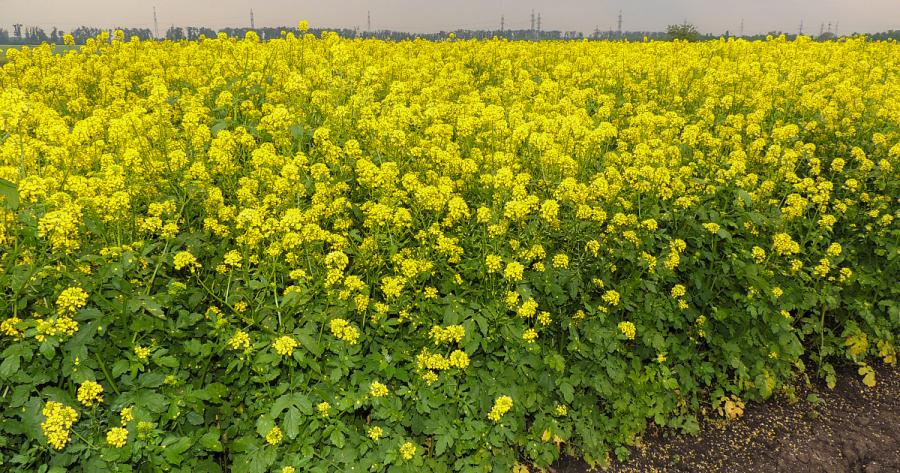
Mustard plantations. Photo: All‑Russian Research Institute of Oil Crops named after V.S. Pustovoit
– If phytomining technology is as simple as they say, why isn’t it being implemented everywhere? What are the difficulties and limitations associated with its use?
– Phytomining technology has been known for a long time. As early as the 19th century, scientists noted that plants can accumulate metals. The official year of its birth is 1983, when Rufus Chaney, an agronomist at the U.S. Department of Agriculture, first proposed using plants to extract metals and remediate zinc‑contaminated lands. However, it was only in 2003 that large‑scale tests of phytomining for gold were conducted in New Zealand and Brazil, and the technology entered commercial use for nickel accumulation in 2025.
– What is this due to?
– Two main problems hinder the commercial implementation of phytomining: the selection of plant species and the lack of a comprehensive economic assessment. First, it is necessary to find crops with an optimal combination of phytoremediation capacity, rapid growth, and suitability for mechanized sowing and harvesting. At the same time, the biomass yield with a high content of rare‑earth elements is insufficient. Plants need time to accumulate metals, and the process itself has a long cycle. Even on man‑made waste dumps, the concentrations of rare‑earth elements are often too low for classical extraction. Secondly, even the most effective hyperaccumulator plants produce metals in milligrams or grams, which is incomparable to the tons required for industrial supply chains. Processing plant raw materials is an expensive and technologically complex stage. Successful phytomining requires vast land areas and stable plant growth, which creates additional practical difficulties. Despite this, the technology is already being used in industry for nickel. To date, there are several companies that are successfully applying this technology on an industrial scale or are in the process of actively scaling it up. The key players here are the USA and Australia; in France, the company Econick is operating, and in Albania, Metalplant is active. Field tests show economically significant yields – approximately 22.6–77 kg of nickel per hectare per year.

Lyudmila Komarova
– What are the ways to overcome the mentioned challenges?
– The ways to overcome the challenges include the following areas: 1) selection and genetic engineering to improve efficiency; 2) the use of machine learning to select species, predict yields, and model resilience; 3) processing enriched biomass into related products (for example, fertilizers and catalysts), which increases the commercial appeal of the technology; 4) interdisciplinary and intersectoral cooperation to move from laboratory developments to field testing.
– Besides the extraction of rare earths, in which areas might the ability of plants to accumulate elements be in demand?
– Phytoremediation (environmental cleanup) is the main and most widely used area. Plants can perform several functions. First, they can be used to cleanse soils of heavy metals (zinc, copper, cadmium, cobalt, manganese, chromium). Hyperaccumulator plants can accumulate up to 5% nickel, zinc, or copper in their leaves, calculated on the basis of dry weight. For example, willow and poplar. They can also be used to remove radionuclides. For example, for removing cesium‑137, one of the most effective accumulators is an aquatic plant – the lesser duckweed. Leguminous and cereal plants are used to remove organic pollutants (petroleum products, pesticides).
Another area of application for such plants is environmental monitoring. Hyperaccumulator plants can serve as pollution indicators, allowing the content of toxic elements in soil to be assessed without the need to collect and analyze a large number of samples.