Anyone who shoots with a smartphone or a professional camera has encountered the presence of noise in the photo – graininess and various distortions, especially when shooting at dusk or in poor lighting conditions. Physicists from the National Research Nuclear University MEPhI have made a breakthrough: they have developed a method that allows you to estimate the noise level of a camera from just one image. The study was published in the prestigious international journal IEEE Access (Q1).
The problem of the presence of noise in images is as old as the world. When photographing with digital cameras, many factors are sources of noise.: uneven lighting, heating of the matrix, differences in pixel sensitivity, technological defects in the manufacture of cameras, etc. Camera manufacturers rarely indicate the actual noise characteristics of their devices, and existing measurement standards (for example, EMVA 1288) require dozens of special scenes to be shot and take a lot of time.
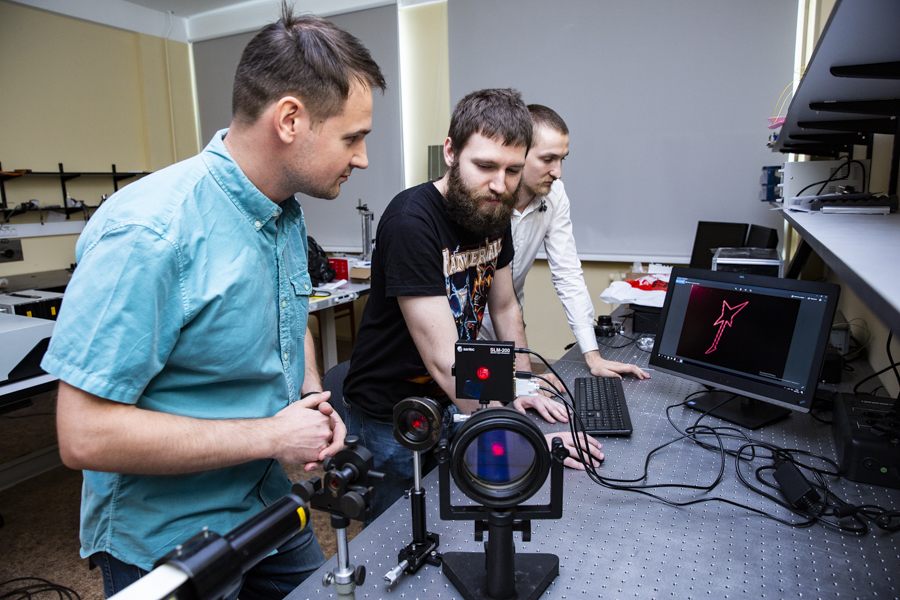
A group of scientists from the Laboratory of Photonics and Optical Information Processing at the Institute of Laser and Plasma Technologies at MEPhI has proposed an elegant solution for evaluating the noise characteristics of digital cameras. Instead of a lengthy process of filming on laboratory installations, their method uses innovative mathematical processing of a single frame. The developed method makes it possible to estimate not only the magnitude of the total noise, but also the values of each type of noise individually. Traditionally, noises are divided into four types: light, temporal and spatial, and dark, also temporal and spatial noises. Light noises appear during the shooting process and depend on the amount of light hitting the matrix, dark ones are present even in the absence of lighting. Spatial noise is constant over time and is associated with differences in pixel sensitivity, while temporal noise varies from frame to frame.
The essence of the novelty is in image segmentation and multi–stage approximation. Scientists divide the image into areas with different brightness and uniformity, which allows us to roughly determine how significant the noise is in individual pixels of the image. Then the weighted averaging procedure is applied to the obtained data, which filters out random fluctuations in the signal and allows for a significantly more accurate result.
Optical experiments using various types of cameras (including the popular Canon EOS M100 mirrorless camera) have confirmed the effectiveness of the approach. If the existing single-frame methods gave a significant error in determining noise characteristics, then the new development made it possible to increase the accuracy of noise analysis by units and even tens of times! It is especially important that for the first time the method allows you to correctly estimate the PRNU (Photo Response Non-Uniformity) parameter – the difference in pixel sensitivity – from a single image. Previously, this was only possible based on the results of shooting a long series of homogeneous images.
The new technology radically speeds up the process. Instead of shooting hundreds of frames and processing for hours, the result can be obtained in a matter of minutes. This opens up a wide range of prospects, from fast camera setup for scientific experiments to improved noise reduction algorithms in smartphones and video surveillance systems. For example, knowing the exact noise characteristics, neural networks will be able to more effectively correct images by separating noise components and individual details of objects in the image.
"The quality of the cameras often suffers from pixel noise from the photosensor. At the same time, the scope of digital cameras is constantly expanding. And in order to increase both the speed of recording information, as well as its quality and even quantity, the accuracy of information about sensor noise is becoming increasingly important," the authors note.
The development of scientists at the National Research Nuclear University MEPhI is a step towards creating an "ideal" digital photograph, where technology will understand its own shortcomings and compensate for them at the software level, giving us truly clean and clear images in any conditions.
The work was supported by the grant of the Russian Science Foundation No. 24-19-00898, the head of the grant is Doctor of Physico-mathematical Sciences, V.N.S. Vladislav Rodin.