The world's most powerful particle accelerator, the Large Hadron Collider (LHC for short), has been shut down for four years. According to the European Organization for Nuclear Research (CERN), it will undergo a large-scale modernization, including increasing the intensity of colliding proton beams and replacing the main detectors. We talked with Evgeny Soldatov, a leading researcher at the Department of Elementary Particle Physics at the National Research Nuclear University MEPhI, who worked at CERN from the Russian side, about whether scientists have been able to confirm or refute the Standard Model (the theory describing all interactions of elementary particles) over the 18 years of the LHC's work, as well as how it will change after reconstruction.
The interview was originally published in Moskovsky Komsomolets.
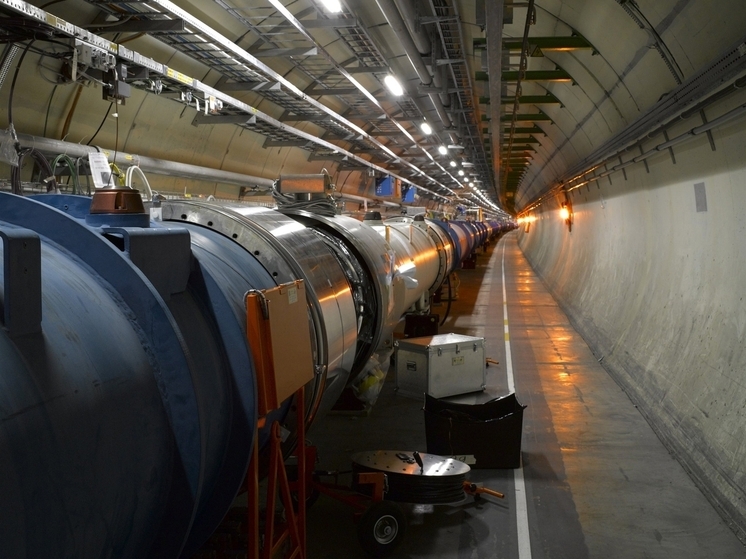
Foto: VIEW/Global Look Press
– Moving on to the update, it would be nice to summarize the previous work. Tell us about the most striking achievements of the LHC scientists over the past 18 years.
– The main task of the Large Hadron Collider was to verify the Standard Model and complete its construction. The new particle discovered here in 2012, the Higgs boson, turned out to be exactly the final "brick" in order to complete the construction of the Standard Model.
Before the discovery of this particle, there were some contradictions in the "heart" of the Standard Model. For example, theory predicted that all particles should be massless. But you and I understand that everything around us, including us, which are actually made up of the same elementary particles, is massive. There was a direct contradiction in this, and we resolved it by discovering the Higgs boson, thereby confirming the theory that explains the mass of particles. In 2013, the Nobel Prize was awarded for this discovery.
More from the new one. For the first time, new particles have been discovered in the LHC, which were previously predicted by the Standard Model. As you know, the nuclei of our atoms are made up of protons and neutrons, and protons and neutrons are made up of various quarks. By colliding protons with each other at tremendous speeds in the collider, we got a lot of particles consisting of different quarks, including very heavy ones, for example, beauty quarks.
Another task of the Large Hadron Collider and its experiments was to move further, to expand the Standard Model (SM), which we have been building for 50 years. The fact is that it doesn't include a lot of things today. For example, the modern theory of particle physics — the Standard Model does not include gravity. Astrophysicists see evidence of the existence of dark matter in space, but we don't even know what it should consist of yet. These are questions that physicists will try to solve in the future.
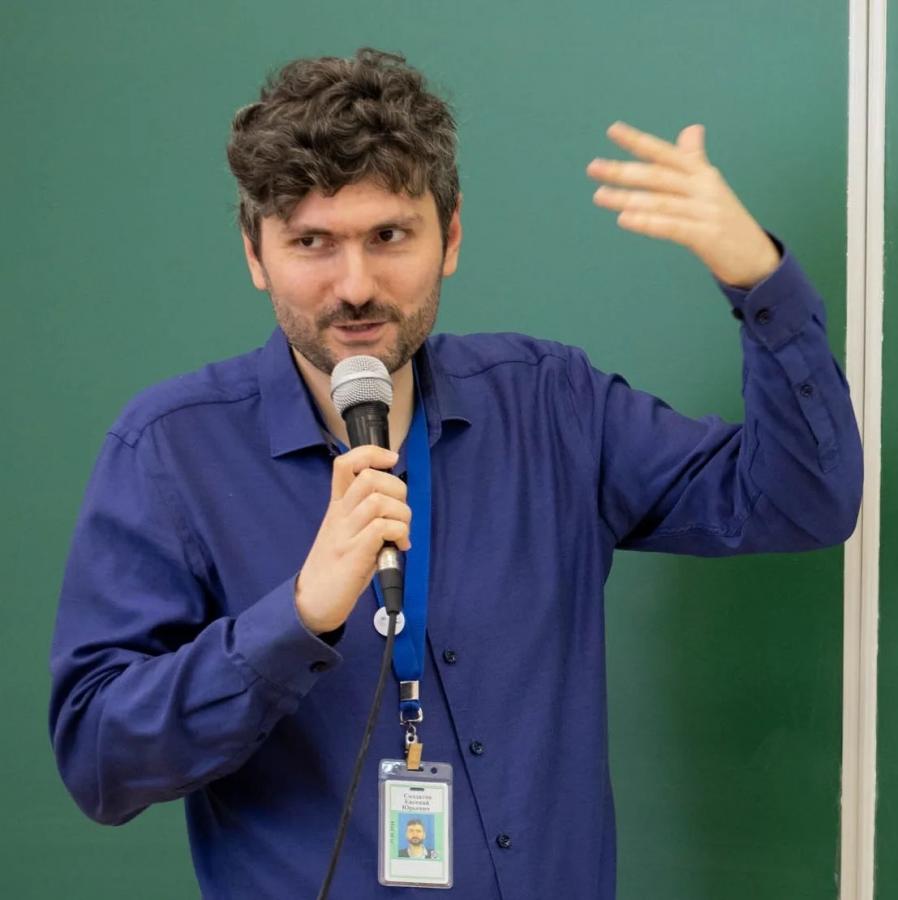
Evgeny Soldatov
– The collider is "closed" for four whole years. What will change by 2030?
– If it is now called LHC, then the new version will receive a "prefix": "High—luminosity LHC" (HiLumi - High-Luminosity LHC).
– And what does "high luminosity" mean?
– This is just the intensity of the proton collision, which will be increased 10 times.
– Why is it necessary to increase this intensity?
– In order to collect more statistics, more events and, based on these more statistics, check already known interactions for any anomalies or deviations. Thus, we will again look for new particles to explain everything that has not been explained before. For example, today we don't know why the six quarks we discovered have certain masses, some of which vary tenfold.…
– What will the engineers at the LHC have to redo?
– The size of the accelerator will not change. The main detectors — ALICE, CMS and ATLAS - will be strengthened, which will allow them to work with increased collision intensity. Superconducting magnets will also be replaced, and systems that increase the frequency of particle collisions will appear.
Author: Natalia Vedeneeva