According to the Moskovsky Komsomolets newspaper, a nuclear clock went on the planet, which has brought humanity closer to the ultra–precise measurement of a second - 1 by 10-20. Several scientific groups in different parts of the world announced the achievement of the goal – the first experiments to launch clocks powered by the isotope thorium-229. Everyone has been waiting for these experiments for more than 20 years. Together with representatives of the USA, China and Europe, our Russian scientists from the National Research Nuclear University MEPhI were at the forefront. Back in the 1990s, it was the Russian scientist Evgeny Tkalya who developed the theoretical basis and proposed the use of this transition for the time and frequency standard. The highlight of last week was the publication of physicists from Tsinghua University of China and the Vienna Center for Quantum Science and Technology in Austria, who "for the first time" used the nucleus of the thorium-229 atom to measure time. So far, they have not overtaken the most accurate strontium and ytterbium atomic clocks to date, but it's a start. The high accuracy of the frequency standard will make it possible to measure the Earth's gravitational field, remotely detect deposits of rare earth elements, oil and gas fields, and solve special-purpose tasks. The MK correspondent talks about all this with Peter Borisyuk, one of the developers of the Russian scientific group, head of the project office of the International Quantum University, Head of the Department of Quantum Metrology at the Laplace Institute of the National Research Nuclear University MEPhI.
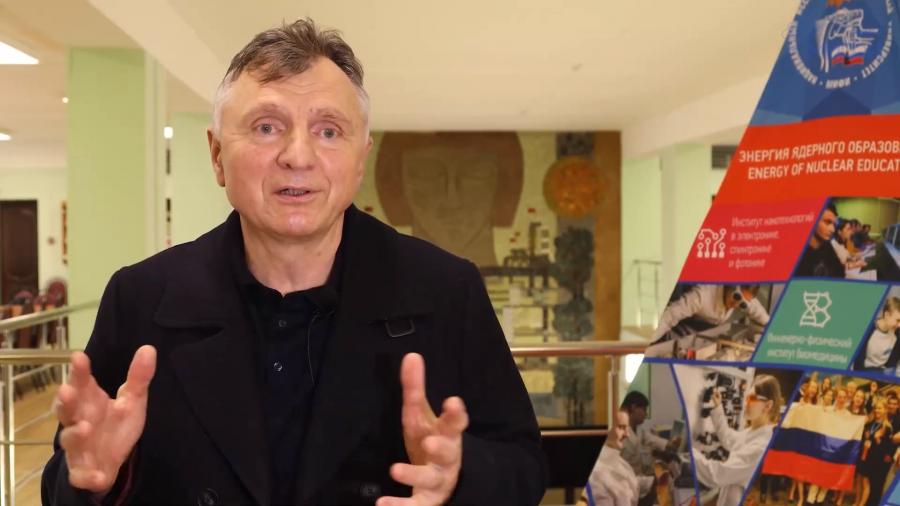
Evgeny Tkalya
– What is the advantage of its thorium-229-based watches compared to atomic ones?
– If atomic clocks measure time by recording the frequency of atomic transitions, then nuclear clocks count seconds by changing the configuration of the core. Since the nucleus is much more isolated from the environment than the electrons surrounding it, it is less vulnerable to interference from electric and magnetic fields, which means that in the future it will be able to measure a second more accurately than existing atomic clocks.
– Why did everyone choose Thorium-229?
– Only this element makes it possible to measure changes in the structure of the nucleus using laser radiation. Scientists have found the resonant frequency of laser radiation, which causes the thorium-229 core to enter an excited isomeric state.
– What kind of accuracy did the created nuclear clocks achieve?
– So far, it is less than the current standard – only 1 by 10 to minus 15 degrees. But in the future, in a few years, this radioactive isotope with a half-life of 7880 years will allow us to refine the definition of a second to 10 to minus 20 degrees.
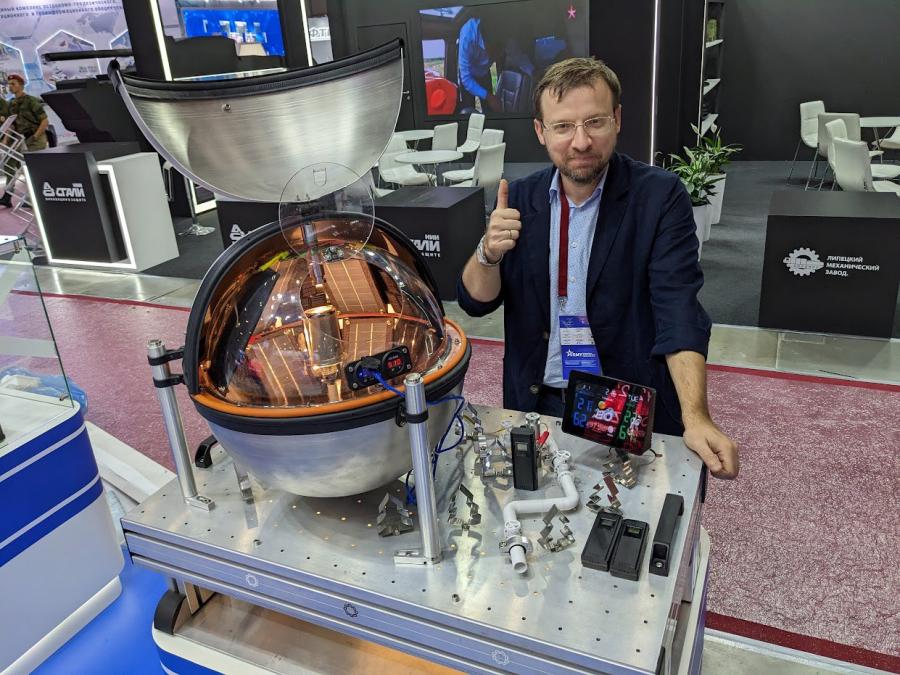
Peter Borisyuk
– Who is ahead of the world in developing nuclear watches now?
– We can say that the Americans, Chinese, and Europeans are on a par by introducing thorium-229 nuclei into wide-band fluoride-based crystals. We are moving at a good pace, but, alas, so far we are only forced to catch up with foreign physicists, although the idea of creating thorium clocks was expressed more than 30 years ago by our scientist Evgeny Viktorovich Tkalya, who is a professor at our department at the National Research Nuclear University MEPhI, as well as a researcher at the RFNC VNIIEF and Lebedev Physical Institute of the Russian Academy of Sciences. Moreover, if back in the early 2000s, all the developers of nuclear watches in the world referred to it, then after 2022, as if on someone's command, they stopped. This is especially strange, given that leading American publishers recognize the pioneering contribution of the Russian scientist to the thorium subject.
– In theory, you should be in the lead right now. How come you're just catching up?
– I can tell you. Our experimental thorium project was launched back in 2012 under the leadership of Viktor Ivanovich Troyan, Professor at the National Research Nuclear University MEPhI, and Evgeny Viktorovich Tkalya joined the project as a theorist. The project was planned for three years. At the first stage, we had to create an ion trap, at the second – a laser cooling system, and at the third – make a laser to search for the very nuclear transition. We were supported in the first stage – we made an ion trap by publishing two patents, and when it came to the second stage, the project was unexpectedly closed.
– What was the explanation?
– "The work did not correspond to the subject of the grant," we were told that this was a metrological task, and it should be solved with metrologists, not with nuclear scientists... We went the other way, secured funding from the Russian Science Foundation, purchased instruments, a spectrometer, updated the instrument base, went ahead, and soon, in 2022, we applied for an extension of the current Russian Science Foundation grant for leading laboratories. But we were told, "Guys, we don't support extending your project because you haven't developed a nuclear clock.". Although in 2022, no one in the world has yet developed a nuclear clock. The entire scientific world, including us, was one step away from this achievement...
– How did you achieve continued work?
– We have been taken under our wing by the Scientific Center of Physics and Mathematics in Sarov under the leadership of Academician of the Russian Academy of Sciences Alexander Mikhailovich Sergeev, for which we are very grateful to him. Now we are almost neck and neck with foreign groups. Unfortunately, due to the "disrupted" financing, we are lagging behind a bit. And some of the people scattered at one time, with the wording: "We need to feed our families!"
– And yet, despite everything, you persevered and continue to work. Are your experiments different from those abroad?
– We are all moving in approximately the same channel. Experiments with the creation of solid-state nuclear clocks with the introduction of thorium into calcium-fluorine or similar fluoride crystals have shown that it has not been possible to obtain such unprecedented accuracy as theorists say (10 to minus 20 degrees), that is, 2-3 orders of magnitude better than that of strontium or ytterbium. Therefore, we have also created our own solid-state clocks, and now, like our colleagues abroad, we are working on the second concept, when thorium "sits" in the so-called ion trap. There it is cooled to a temperature of about several microkelvins, and then this cold ion, localized in space with the help of electromagnetic fields, is interrogated for its nuclear state.
So, missed priority, loss of funding, after – catch-up. Those who strengthen the scientific and technological potential of the country have to go through a lot in modern Russia! It's good that at least we don't have a shortage of thorium-229. Back in Soviet times, we had a lot of uranium-233, a thorium-229 generator. And in this (thanks to the Soviet legacy) we have an advantage over the Chinese and Europeans, who are forced to buy it from the Americans.
Author: Natalia Vedeneeva, Moskovsky Komsomolets