А meeting of the Materials and Fuel Research Committee of the Advisory Council of the International Research Center for the MBIR Reactor (ICI MBIR), which is being built on the basis of JSC SSC NIIAR in Dimitrovgrad, was held in Moscow. The event was attended by over 80 experts from 35 organizations from Russia, China, Vietnam, Brazil, Uzbekistan, Jordan and other countries. The National Research Nuclear University MEPhI was represented by the Department of Physical Problems of Materials Science (No. 9) of the Institute of Nuclear Physics and Technology.
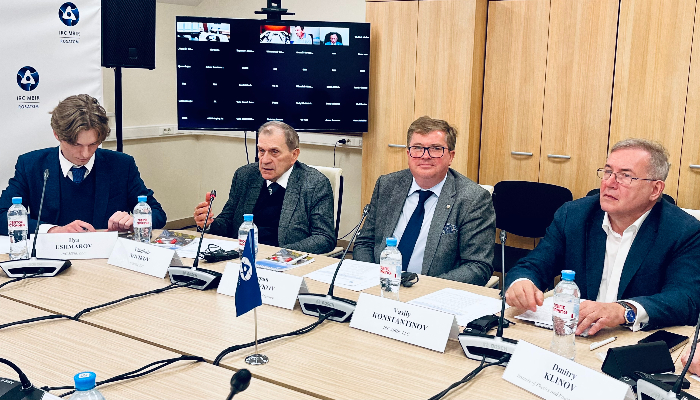
Presentations were made by representatives of scientific organizations of the Rosatom State Corporation, the Joint Institute for Nuclear Research, the Kurchatov Institute National Research Center, the St. Petersburg Institute of Nuclear Physics, the Dalat Institute for Nuclear Research (Vietnam Atomic Energy Institute, VINATOM, Vietnam), the Institute of Plasma Physics of the Chinese Academy of Sciences (Institute of Plasma Physics, Chinese Academy of Sciences ASIPP, China). Vladimir Voronin, Deputy Director for Science at the Kurchatov Institute, St. Petersburg Institute of Nuclear Physics, presented the current status of the PIK research reactor, as well as the scientific program of the International Center for Neutron Research based on PIK. During the meeting, specific research requests for the MBIR reactor were made. They were presented by the VINATOM and ASIPP institutes.
One of the important outcomes of the meeting was the proposal of Igor Tretyakov, Chief Designer of Research and Isotope Reactors and Director of the NIKIET Branch, to combine the research capabilities of unique scientific installations - the high—current PIK (Gatchina) beam reactor and the high-current multifunctional MBIR reactor. The use of different neutron spectra, experimental facilities, and research methods at the PIK and MBIR reactors can provide a synergetic effect for the integrated solution of applied and fundamental problems in the interests of world science.
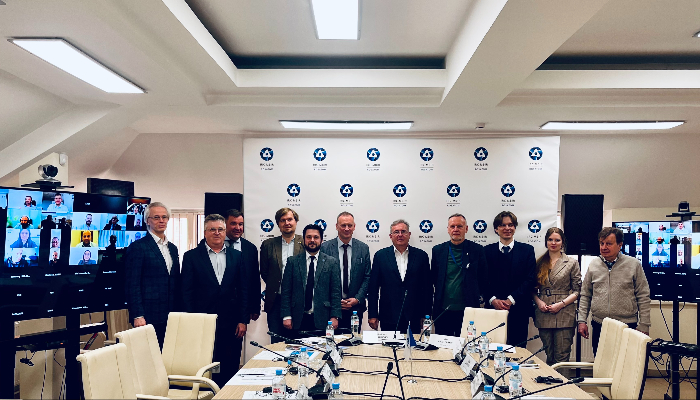
"Combining the potential of the international PIC and MBIR centers will allow us to bring materials science research to a systematically new level. We are not just expanding the scope of work, we will form a unified scientific environment in which fundamental physics is directly interfaced with applied tasks. This will significantly increase both the level of experimental purity and the scale of implementation of the results. In fact, a seamless infrastructure is being laid for the entire scientific search chain — from theory to technology. This approach expands the horizon of our research in an unprecedented way and, thus, our country creates the best platform for multilateral scientific communication and cooperation," said Vladimir Borodin, Professor of the Department of Physical Problems of Materials Science (No. 9) at the Institute of Nuclear Physics and Technology at the National Research Nuclear University MEPhI.
The next important step in the work of the International Research Center based on the MBIR reactor will be the third meeting of the Advisory Board of the ICI MBIR, which will be held on September 30, 2026 in Tashkent at the Institute of Nuclear Physics of the Academy of Sciences of the Republic of Uzbekistan.
For reference:
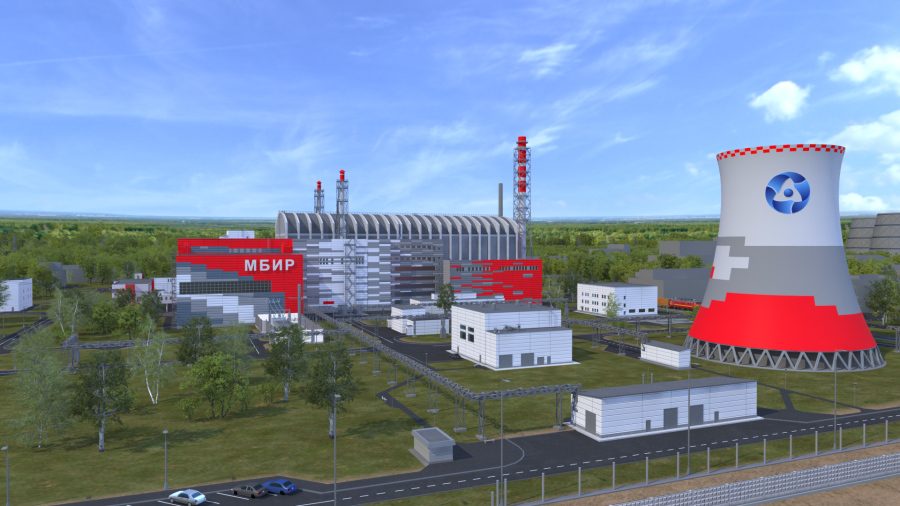
MBIR is a multipurpose fast neutron research reactor with a sodium coolant with a thermal capacity of 150 MW. The reactor is being built in Dimitrovgrad, at the site of JSC State Scientific Center – Scientific Research Institute of Nuclear Reactors (JSC SSC NIIAR, part of the scientific division of Rosatom State Corporation) as part of the national technological leadership project "New Nuclear and Energy Technologies". Work is currently underway on the installation of the reactor's primary circuit equipment: in 2025, cold filter traps of the circuit of the emergency heat removal system will be installed in the design position. As part of the installation of the first circuit, the adapters of hot pipelines to the reactor vessel and the first pipeline blocks were welded, the installation of the main technological equipment in the sodium warehouse building was completed, and the overload mechanism and sockets for steam-water washing of spent fuel assemblies (fuel assemblies) were supplied. In 2026, two emergency heat exchangers weighing 7.3 tons, 5 m high and 1.5 m in diameter were installed in the design position.
MBIR is designed for experimental work, development of radioisotopes, production of modified materials, as well as testing of new types of equipment and technological systems. It is assumed that the unique capabilities of the new reactor will accelerate the development of technologies for two-component nuclear energy and nuclear fuel cycle closure, as well as the creation of safe fourth-generation nuclear power plants.
An International Research Center (ICI) has been established on the basis of the MBIR reactor in the form of an international consortium. Its participants are given the opportunity, as a matter of priority, to conduct experiments necessary for national programs for the peaceful use of atomic energy. The consortium's format makes it possible to flexibly use reactor resources that meet the needs of the scientific community. The MTSI MBIR Consortium is open for new members to join. The Joint Institute for Nuclear Research, the Institute of Nuclear Physics of the Academy of Sciences of the Republic of Uzbekistan and the Chinese company Shanghai ZDAN International have already joined the Consortium as the main participants.