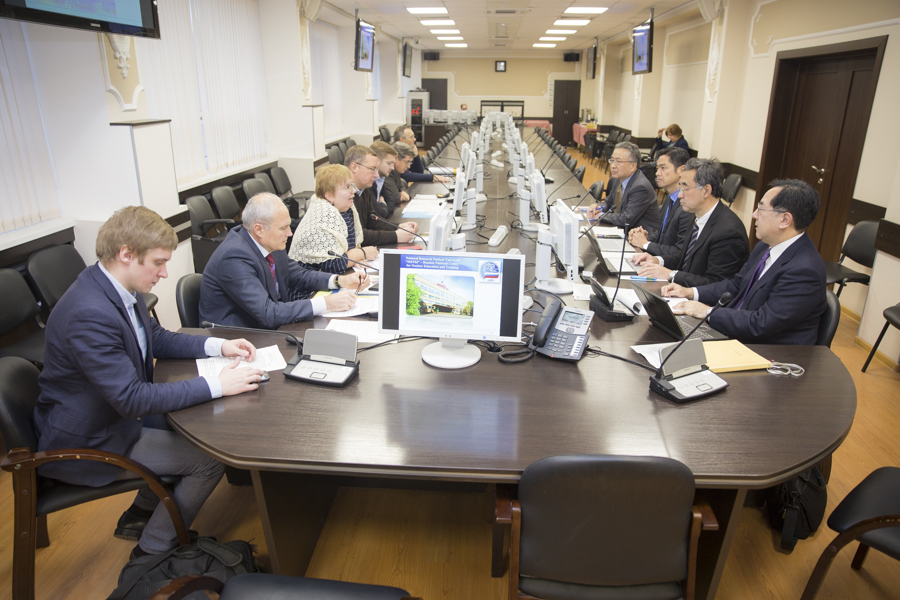
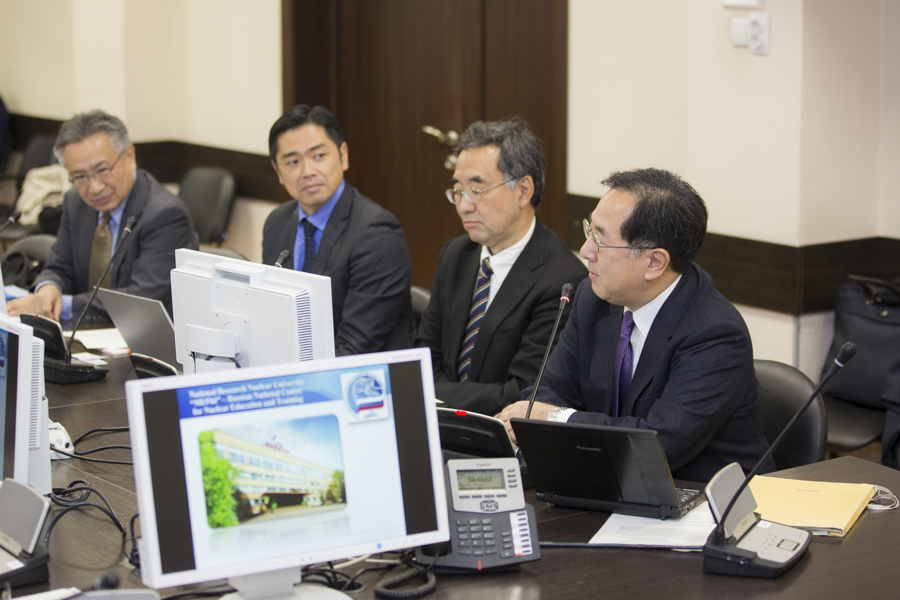
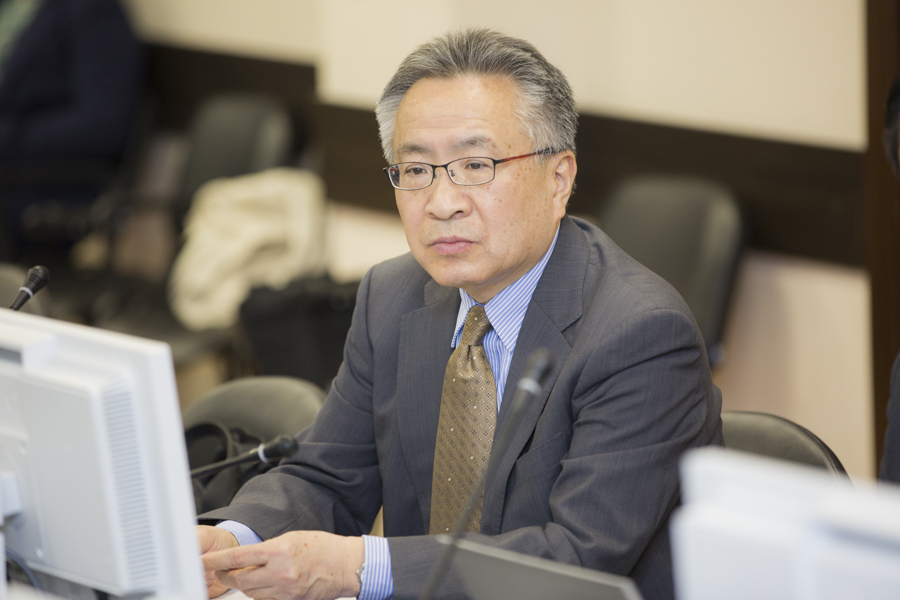
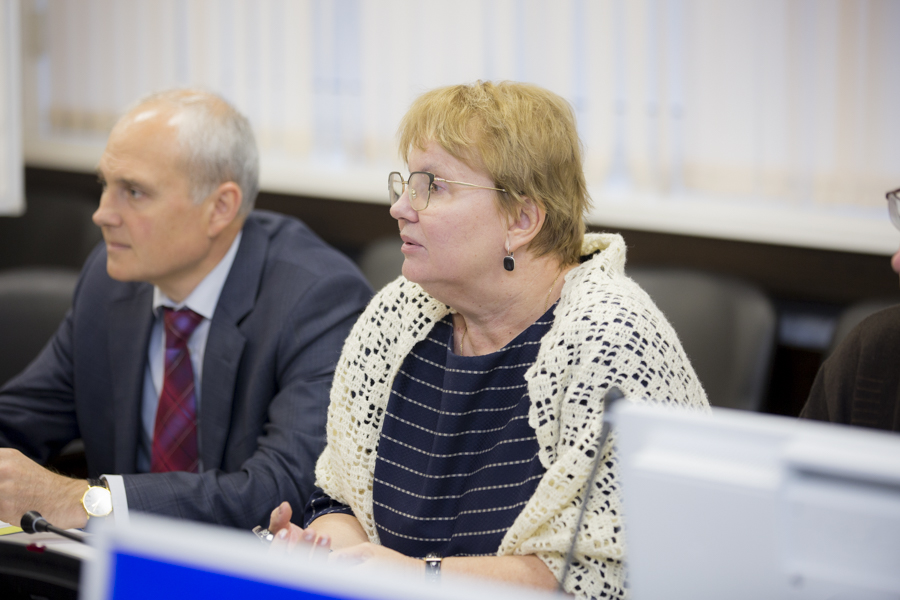
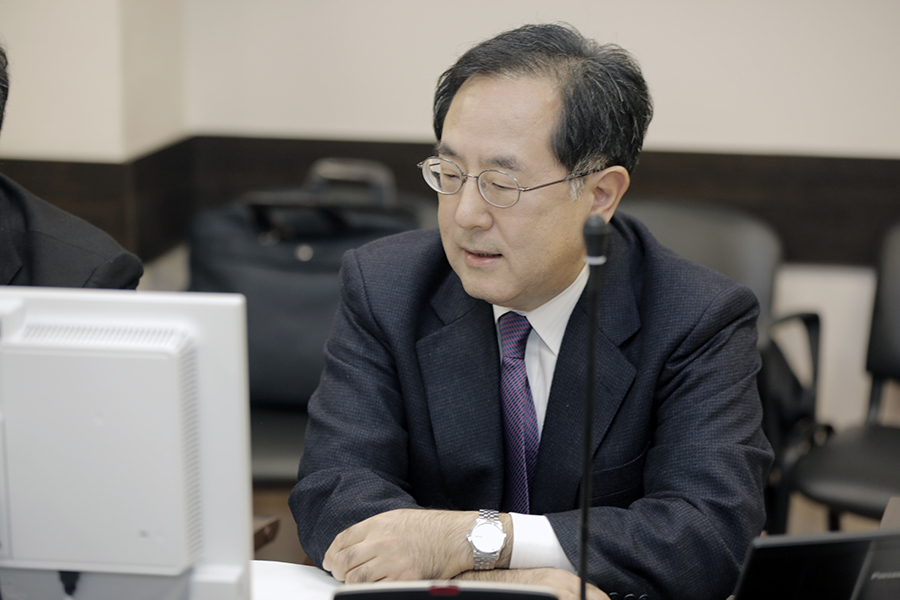
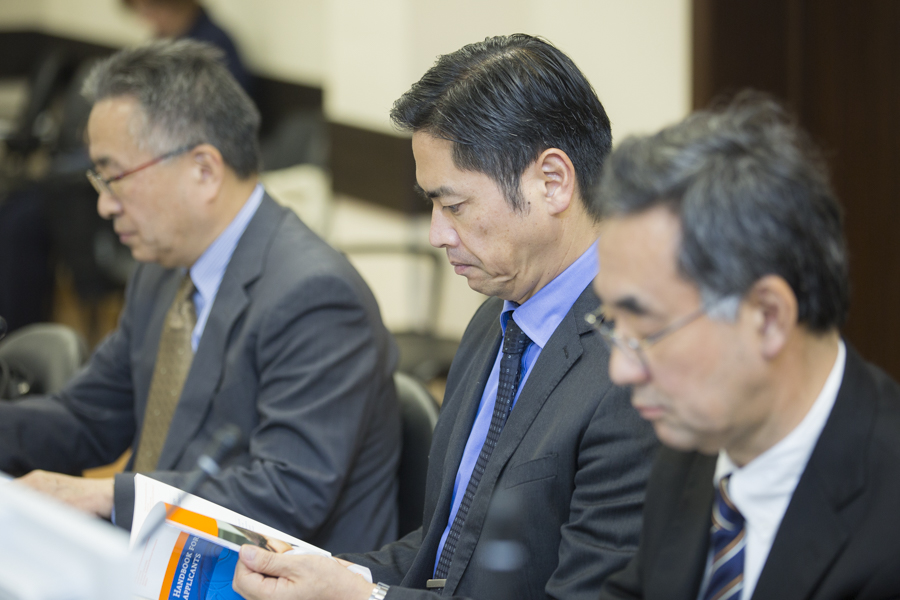
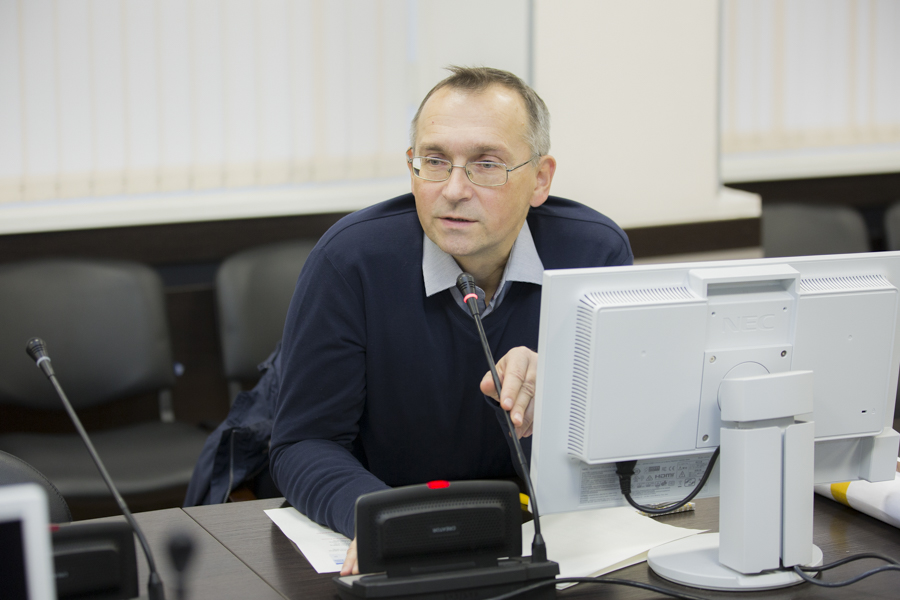
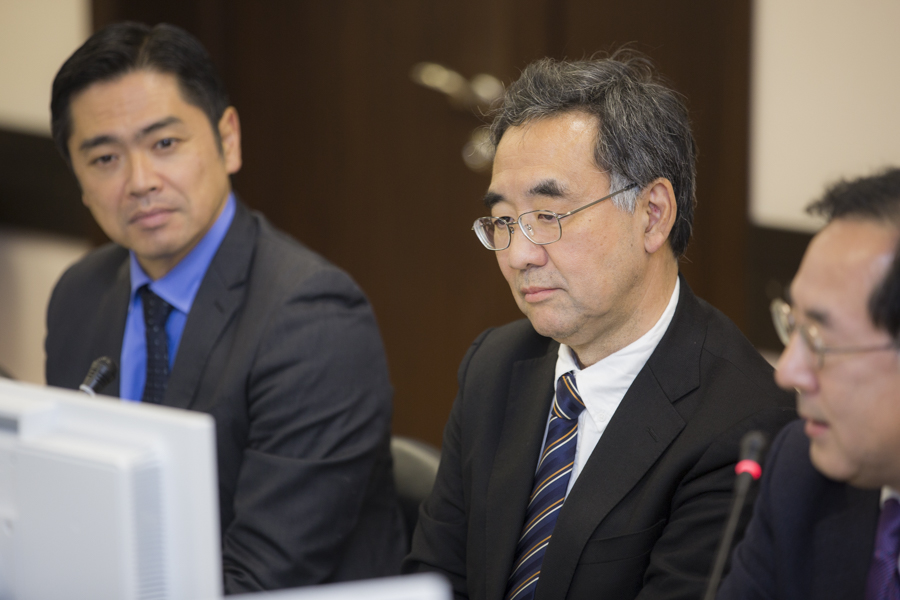
MEPhI has been visited by a delegation of the Tokyo Institute of Technology led by Professor Toru Obara and the Ajinomoto-Genetika Research Institute headed by the administrative manager Yamakawa Itsuo.
It should be noted that the ties of a longstanding cooperation in the field of collaborative research bind MEPhI and TIT. In addition, there is an Agreement, which includes exchange of students for participation in joint programs continues.
Appreciating the potential significance of the cooperation development between the institutions, participants discussed new draft of inter-university exchange, aimed at training of the leading scientists and engineers in the field of healthcare, medicine, nuclear power and energy industries.
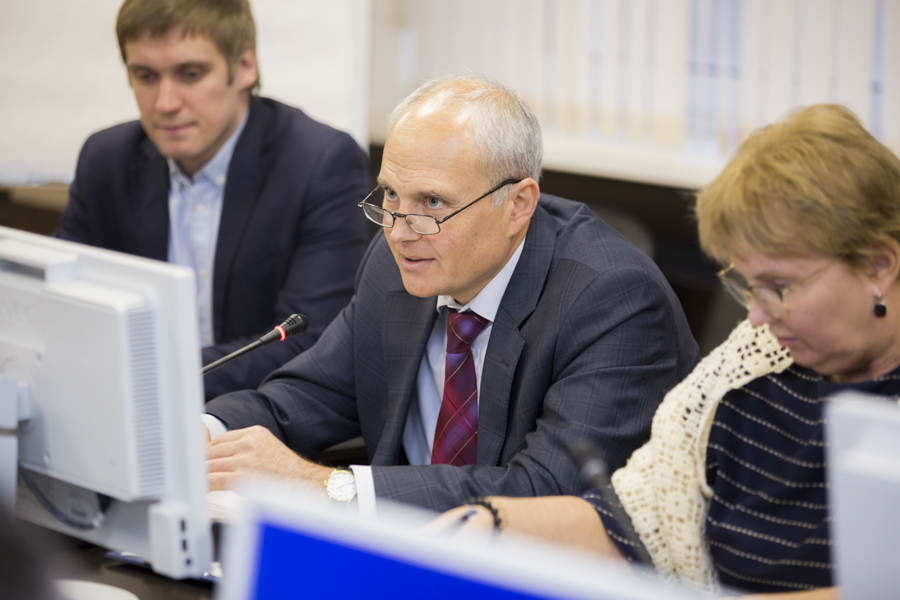
The Deputy Director of the Institute of Nuclear Physics and Engineering, G.V. Tikhomirov and the Director of the Institute of Engineering Physics for Biomedicine I.N. Zavestovskaya spoke about new research and educational programs to represent the capabilities of MEPhI to Japanese delegation.
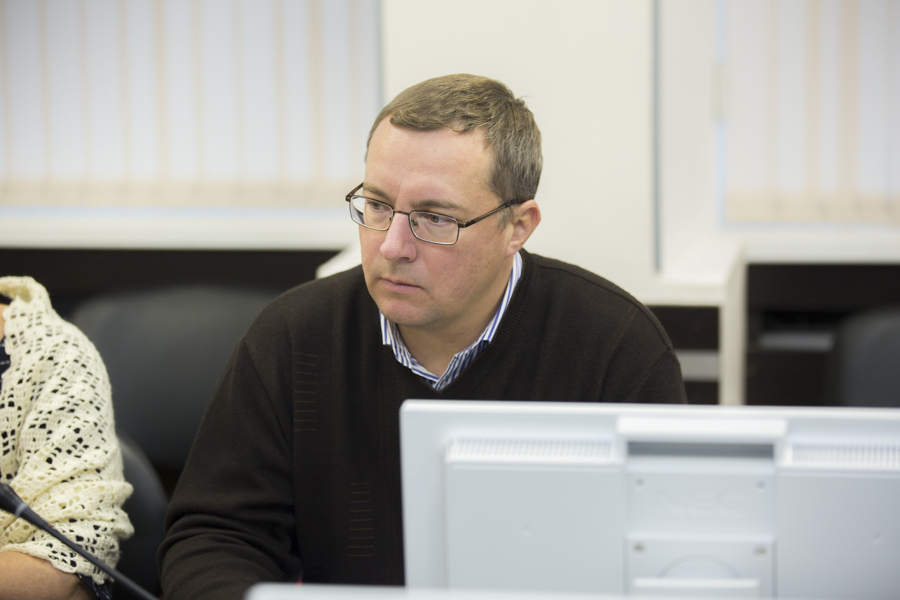
The discussion on the implementation of the interuniversity’s project "Training of leading scientists and engineers in the field of healthcare, medicine, nuclear power and energy industries between Japan and Russia" were actively attended by the staff and lecturers of the specialized departments of the University.
Following the meeting, parties reached an agreement on a short-term (two week) and a long term (from 6 months to a year) mutual internships of students. In early 2018, three MEPhI students, who study nuclear programmes, will travel to theTokyo Institute of technology.
For effective feedback, it is planned to conduct annual meetings between the students of both institutions to discuss results of internship.
Reference:
The Tokyo Institute of Technology (TIT) is the largest higher education institution in Japan, dedicated to training of technical specialists (including nuclear branch) and scientists engaged in basic and applied research. Today, an annual enrolment of TIT is around 10,000 students; the structure of the institution includes three schools (faculties) of higher education (undergraduate), six postgraduate schools (postgraduate) and five research laboratories.