The team of the Institute of Laser and Plasma Technologies at the National Researcj Nuclear University MEPhI has developed a system of continuous authentication of mobile device users based on behavioral biometrics. The research results have been presented in several international conferences and published in an article “Mobile authentication over hand-waving”.
Nowadays, one of the most popular systems for the protection of mobile devices is authentication based on passwords. However, it is inconvenient for users because they have to enter a numeric or pattern lock.
The alternative is authentication by fingerprint, which also has significant drawbacks: attackers using malicious software can copy fingerprints, and even add their own, blocking a device.
The advantage of the method, offered by the specialists from MEPhI, is a continuous protection from outside interference without any additional action by the user.
Behavioral biometrics method allows to observe habitual parameters of a person while he is handling a device, and to determine who uses a smartphone: the owner or another person. The fact is that each of us has a unique and inimitable style of handling the phone — different people hold it differently, differently interact with touch screen, and use apps. It is characteristics specialists from MEPhI suggest to monitor.
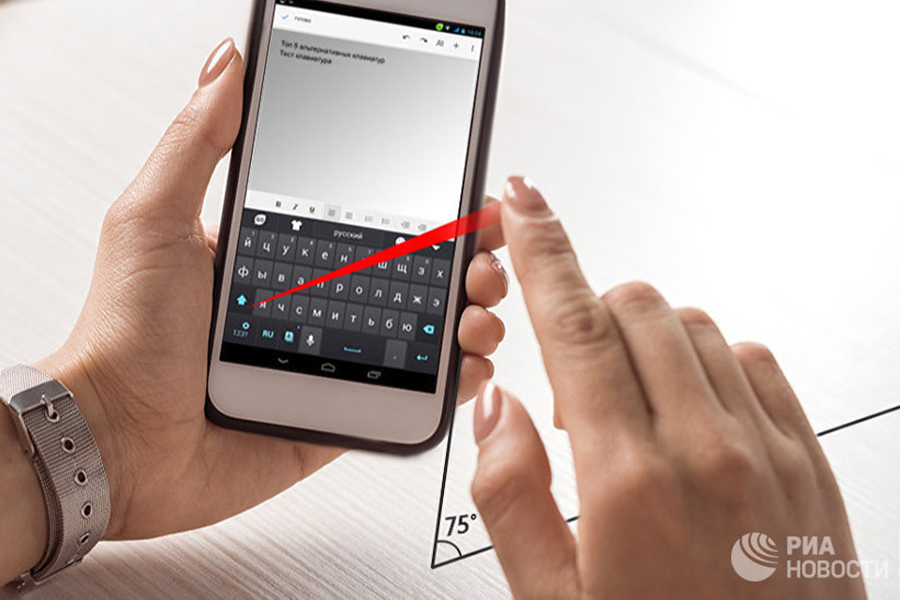
Tracking of finger movements by smartphone
Such an authentication system is convenient because, unlike passwords or fingerprint, behavioral biometric features cannot be lost, copied, stolen or faked. This ensures a high degree of protection of the device from outside interference.
"The scientific novelty of our project is that for the first time we applied the technology for data analysis, machine learning and artificial neural networks to provide continuous authentication of mobile device users according to their behavioral biometric characteristics. The sensitivity of the sensors used in modern smartphones allows you to select the behavioral characteristics of each user and to use authentication with high accuracy on the basis of aggregate data coming from the touchscreen and other sensors," said the project leader, Associate Professor of Cryptology and Cyber Security Department at MEPhI Konstantin Kogos.