International Union of pure and applied chemistry (IUPAC) has approved the names and symbols of four new elements of the periodic table: Nihonium, Moscovium, Tennessine and Oganesson. Name “Oganesson” was proposed in honor of the MEPhI graduate, academician Yuri Tsolakovich Oganesyan for his fundamental contribution to the study of transactinide elements.
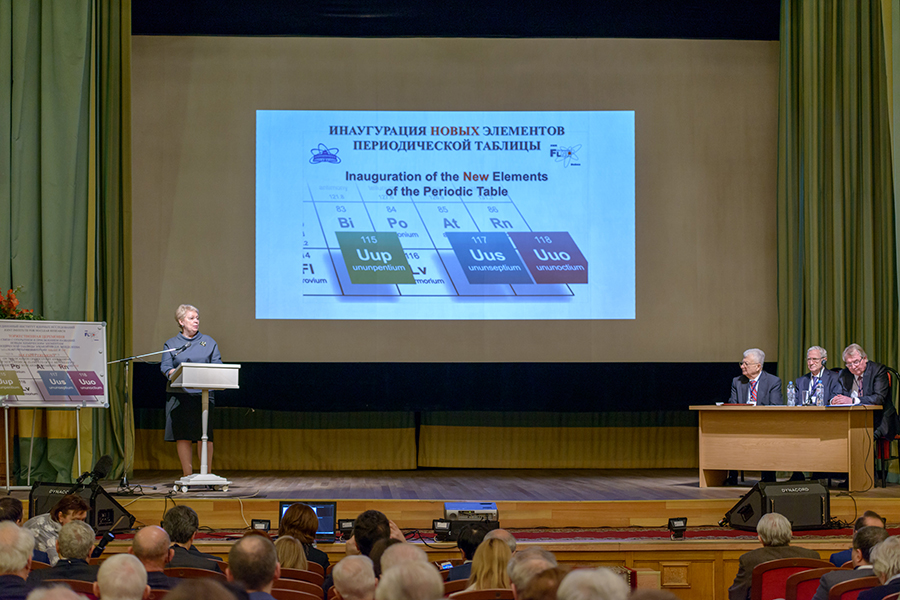
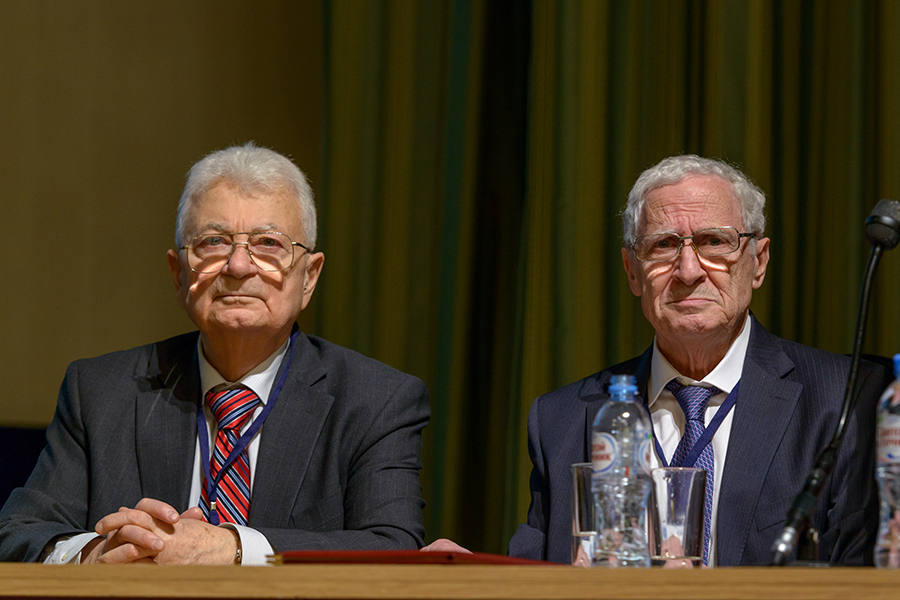
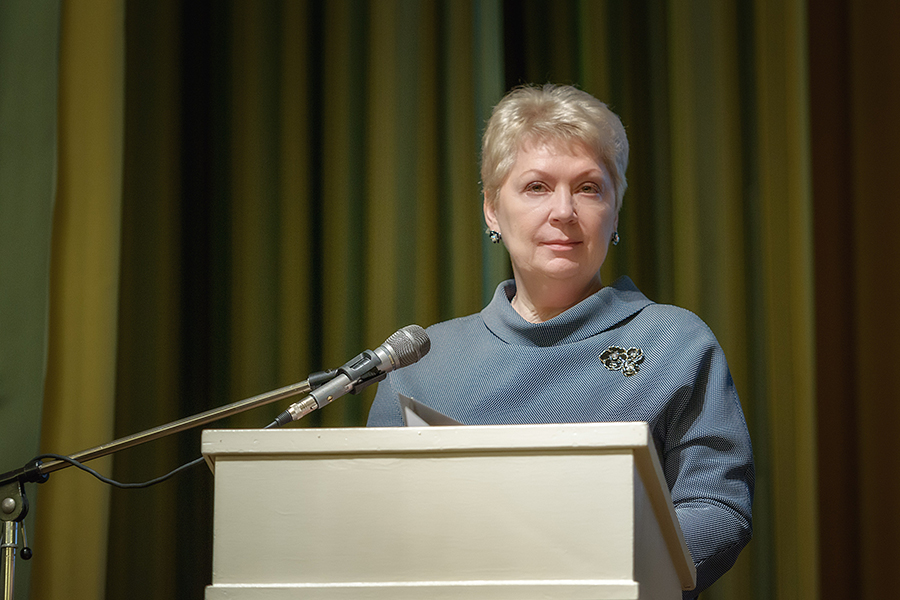
A solemn ceremony devoted to the discovery and naming of new chemical elements (115th and 118th) was attended by the Minister of Education and Science of the Russian Federation O.Yu. Vasilieva and the Deputy Minister of Education and Science G.V. Trubnikov. The event was held in the Central house of scientists RAS.
New elements are synthesized chemical elements with half-lives not exceeding a few fractions of a second and were opened in the Laboratory of nuclear reactions at the Joint Institute for Nuclear Research in experiments in 2002-2005.
Addressing the audience, O.Yu.Vasilyevs said: “The fact that new elements received these names shows the achievements of Russian fundamental science. Now there are all conditions to make science the core of the development of the whole society, and the efforts of the state will be aimed at solving these problems. I am sure that the scientific community will propose new ambitious projects both in the areas of technology and fundamental science that will benefit society.”
On November 28, 2016 the International Union of pure and applied chemistry (IUPAC) approved names and symbols of four new elements of the periodic table: Nihonium (Nh), Moscovium (Mc), Tennessine (Ts) and Oganesson (Og) — for elements 113, 115, 117 and 118. Moscovium is named in honor of the Moscow region, where the JINR is located, and where over the years many super-heavy elements were synthesized. Name “Oganesson” was proposed in honor of the graduate of the Moscow Engineering Physics Institute, academician Yuri Tsolakovich Oganesyan for his fundamental contribution to the study of transactinide elements. Among his numerous accomplishments are the discovery of super-heavy elements and outstanding results in physics of super-heavy nuclei, including the experimental confirmation of the “stability island”.
Following the Ministry of Education and Science (in Russian).