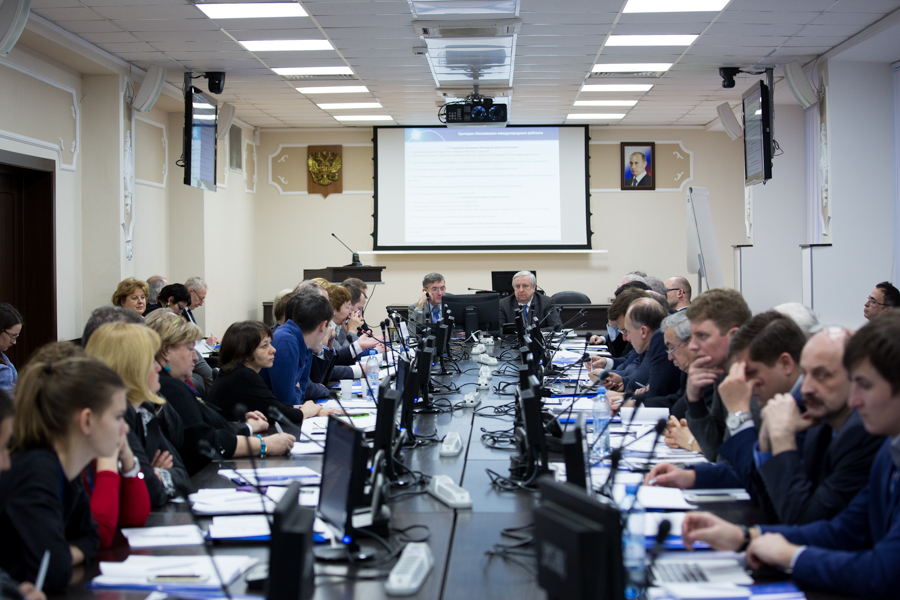
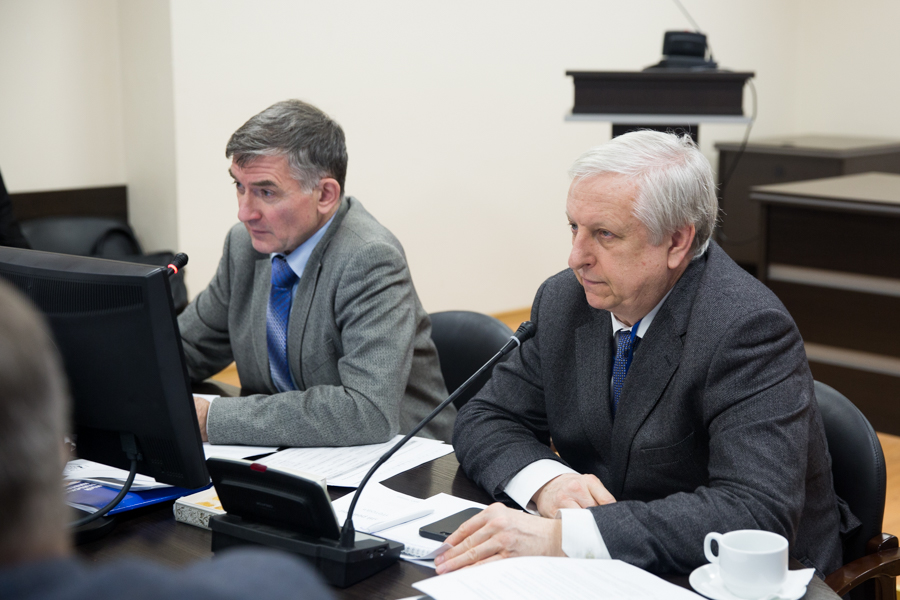
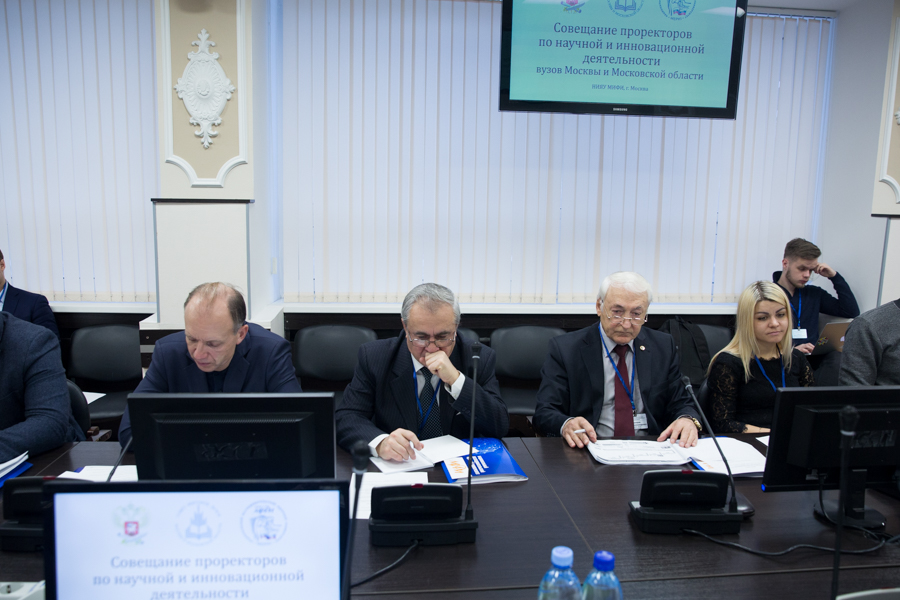
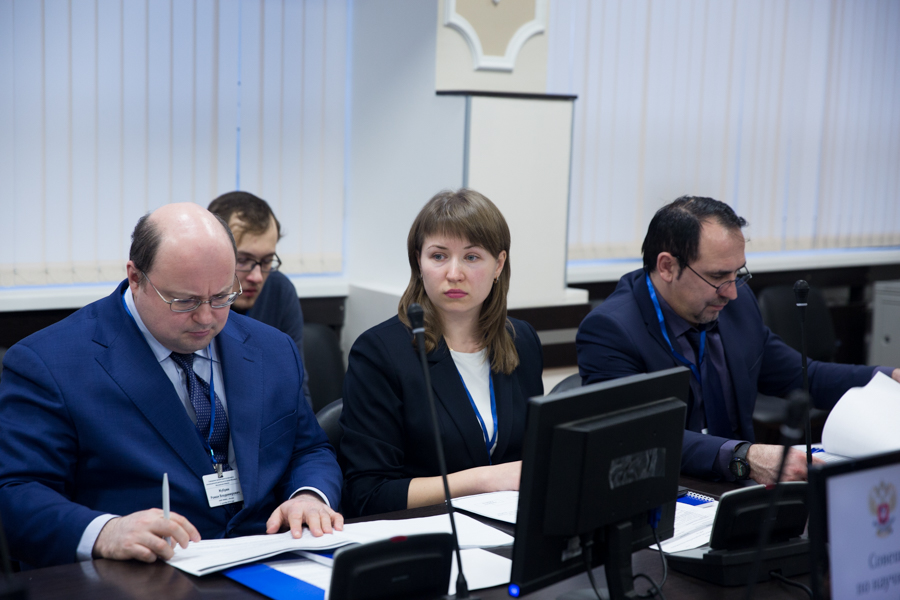
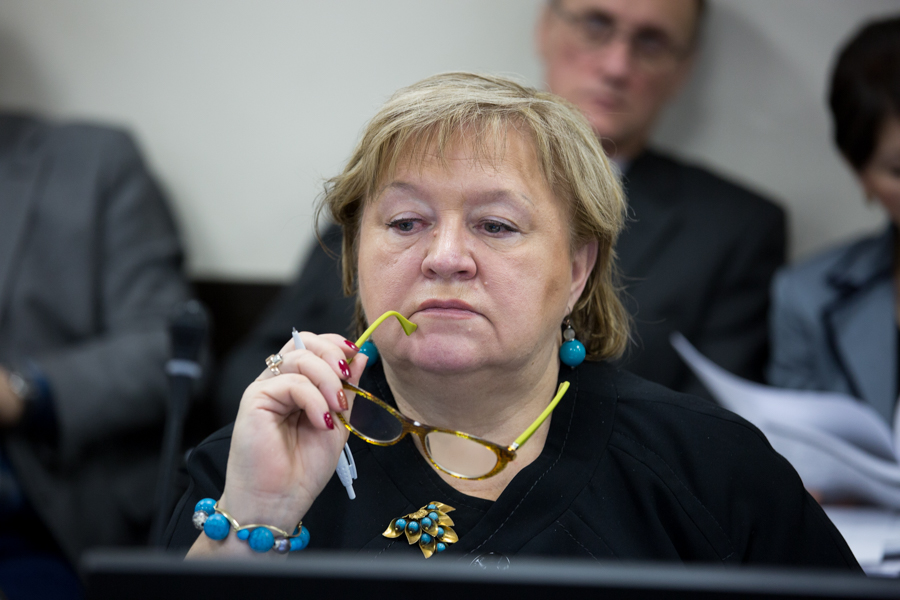
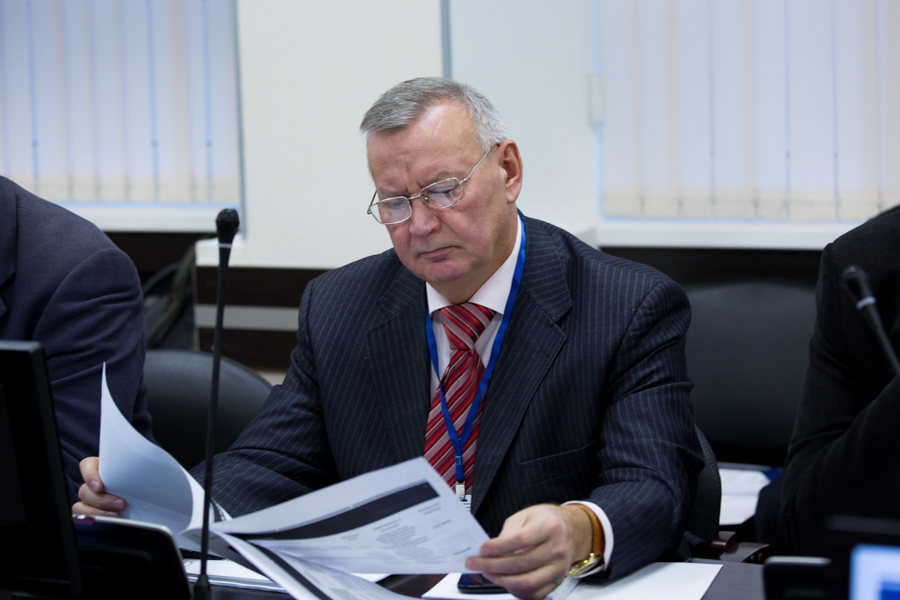
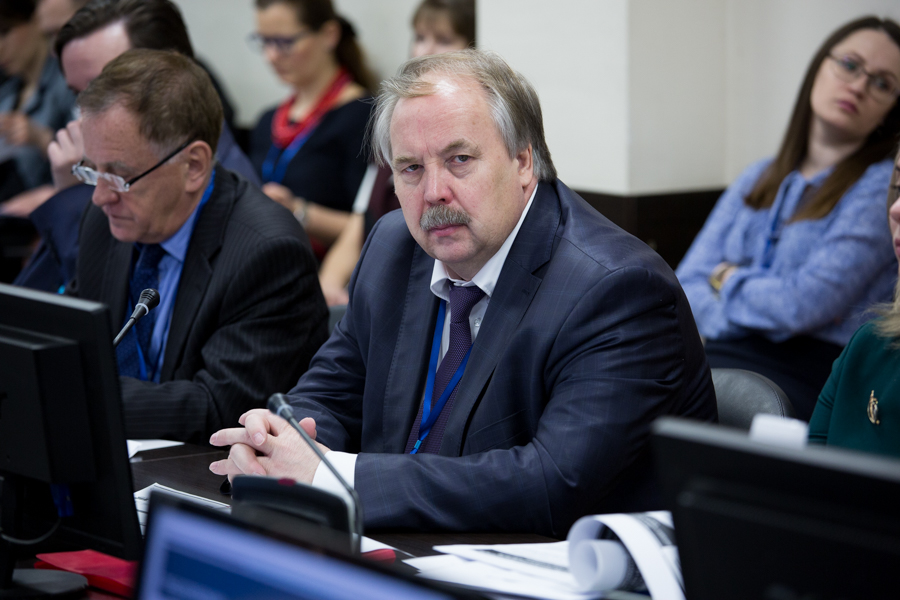
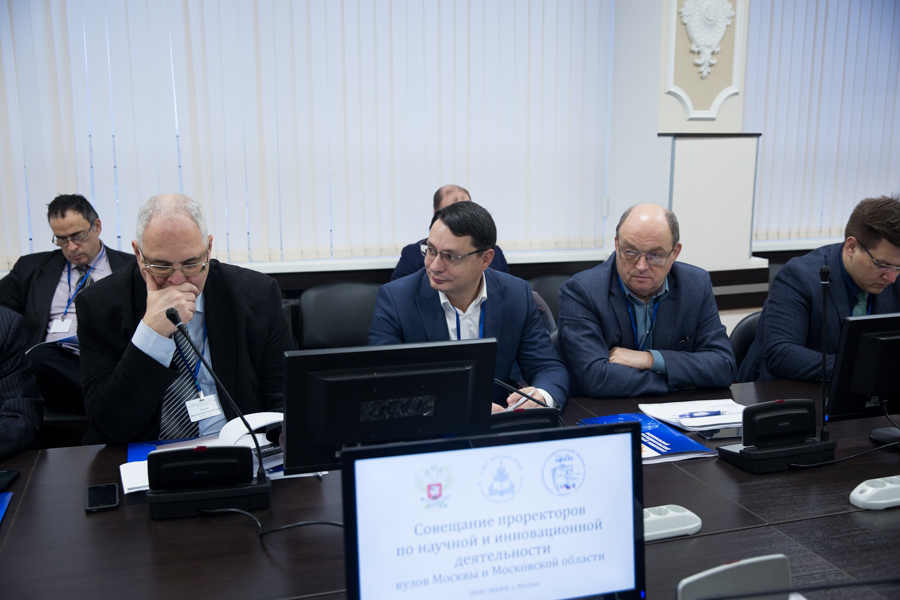
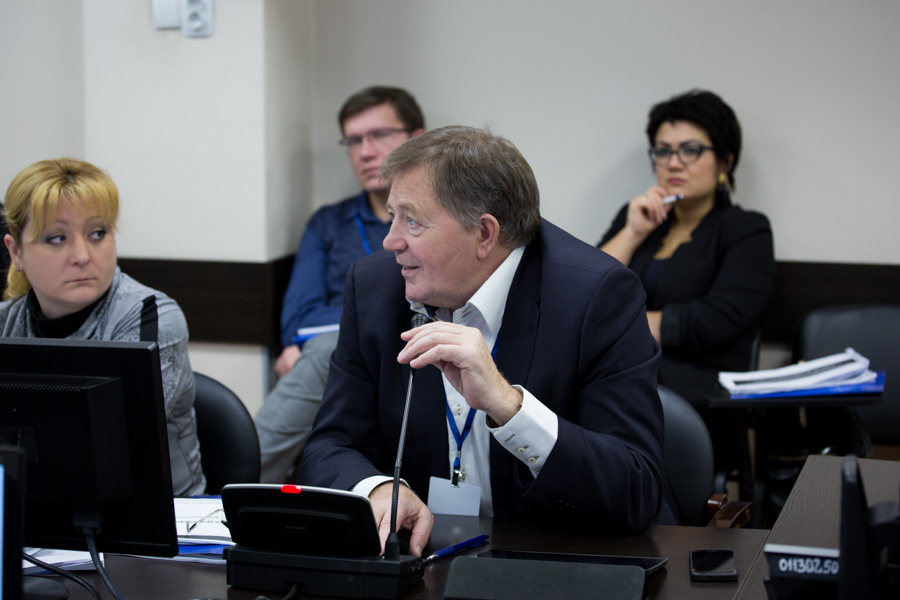
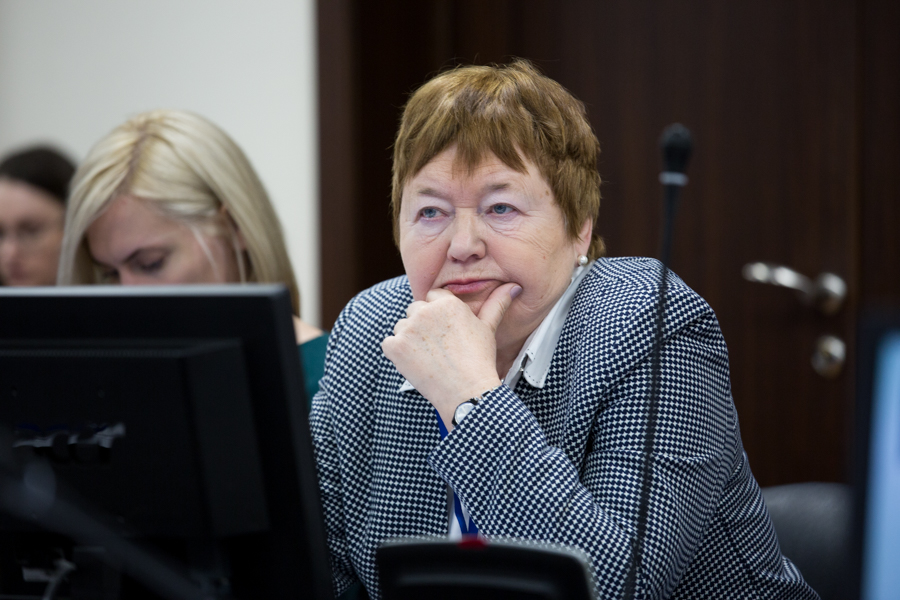
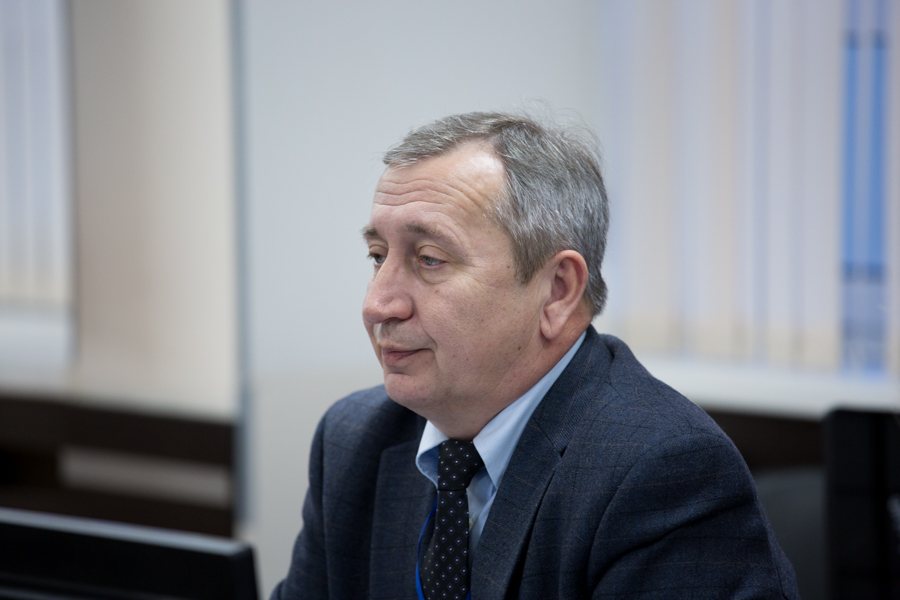
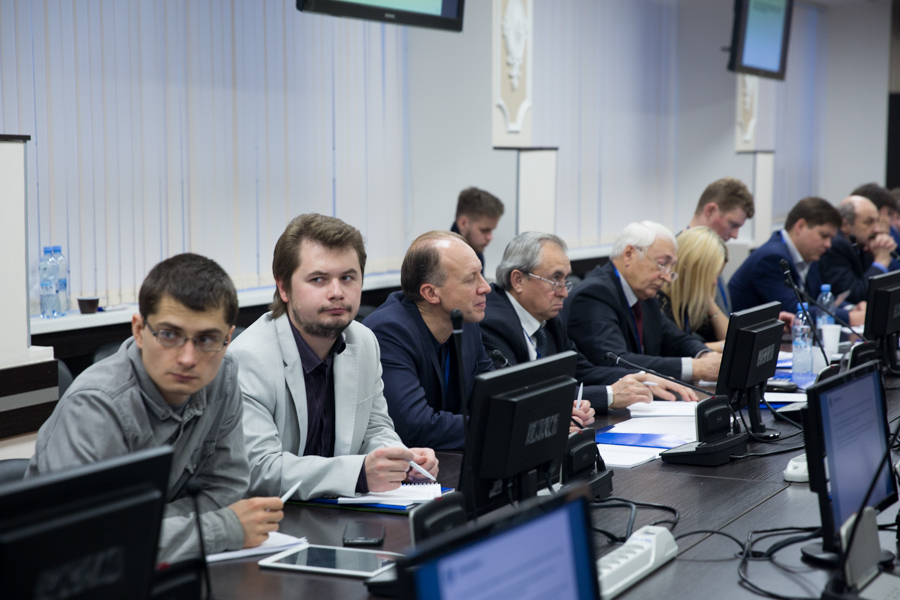
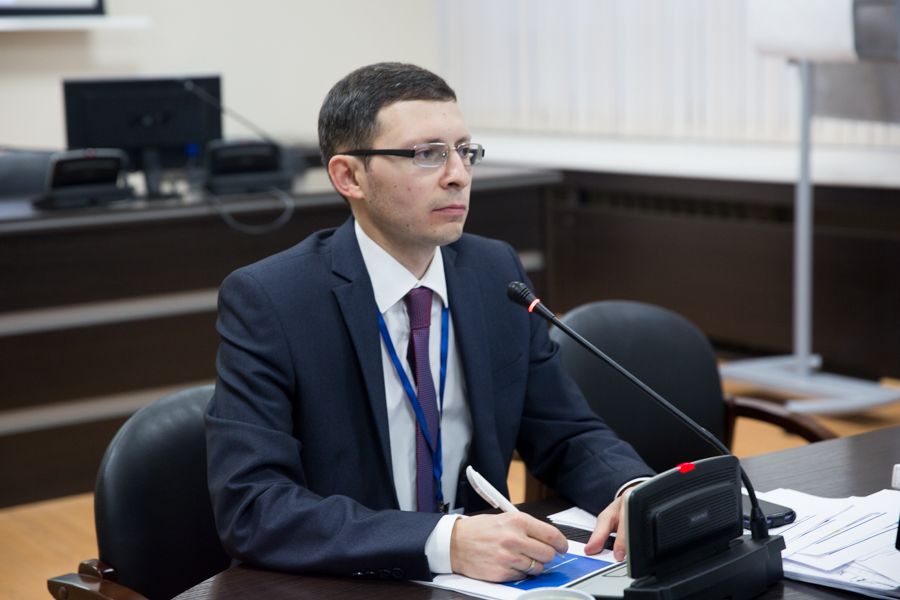
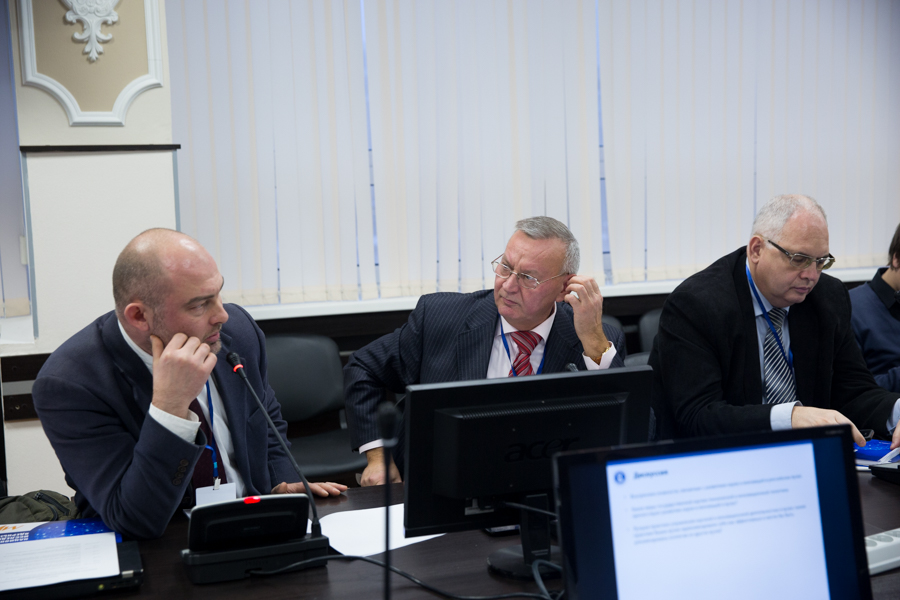
On, December, 21 a meeting of pro-rectors on scientific and innovative work and representatives of Councils of young scientists and specialists of Moscow and Moscow region universities was held in MEPhI, at which the implementation of scientific and technological development policies of the RF was discussed, as well as the project of creation of the Moscow International universities’ ranking.
Deputy Chairperson of the Council of Rectors of Moscow and Moscow Region, the Chairperson of the Commission on Scientific and innovative activity of the Councils of Rectors of Moscow and Moscow region, MEPhI rector M.N. Strikhanov and University Pro-Rector O.V. Nagornov greeted the representatives of higher education institutions, noted the importance of the issues, put on the agenda of the meeting and wished the participants fruitful work.
The Head of the Directorate of Program of MEPhI competitiveness enhancement M.G. Ganchenkova spoke about Strategy of Russian Federation scientific-technical development and the action plan for its implementation.
Currently, there is a lot of emphasis on science and innovation and the mechanisms for achieving the best results in this direction. M.G. Ganchenkova noted that this year the universities have actively participated in the development of the strategy of scientific and technical development, which was initiated on the basis of formulated problems. Among them there are poor management, problems of bringing technology to mass production, enterprises’ weak interest in new technologies.
The following aspects have been proposed, which formed the basis of the strategy: it is necessary to stimulate cooperation and improve the coordination of the research; ensure financing of the whole chain from research to the production; provide flexible tax policy and stimulate the introduction of new technology enterprises.
All the priorities, main trends, principles and measures for realization of the state policy in this area, the expected results of the implementation of the Strategy to ensure sustainable, dynamic and balanced development of science and technologies of the RF for a long period, were formed.
An Action Plan for implementation of the Strategy for Scientific and Technological Development of the RF should be agreed with the Bureau of the Presidential Council of the Russian Federation for Science and Education and approved by the Russian Government until the end of February 2017.
At the moment, it is expected to form a plan of action of the three large blocks: regulatory support of the Strategy implementation, institutional development of the sphere of research and development, specific projects, aimed at scientific and technological development of the country.
Five sections have been marked as the main directions of the state policy in the field of scientific and technological development: human resources and human capital, infrastructure and the environment, interaction and co-operation, management and investment, cooperation and integration.
So far, 15 proposals have been made by universities in these areas.
It was decided that the meeting participants would send additional suggestions to the Commission on research and innovation activities of the Council of Rectors of Moscow and Moscow region until December, 30. The consolidated version of universities’ proposals will be presented for approval by the Presidium of the Council of Rectors in early 2017.
Professor S.V. Kireev presented the analysis of the methodology of QS ranking, consider the dynamics of Russian universities’ movement in the THE ranking.
He discussed in detail the project of creation of the Moscow international ranking "Three missions of universities", as the result of the successful implementation of which the ranking should be recognized.
All modern rankings evaluate the quality of education and research activity of universities. In contrast, in the new ranking another component is introduced - the university and society.
MEPhI rector M.N. Strikhanov noted that the rankings are a mirror, where the activity of the University is reflected, and it is a good idea to create a Russian ranking, considering the quality of educational-scientific and international component of university work.