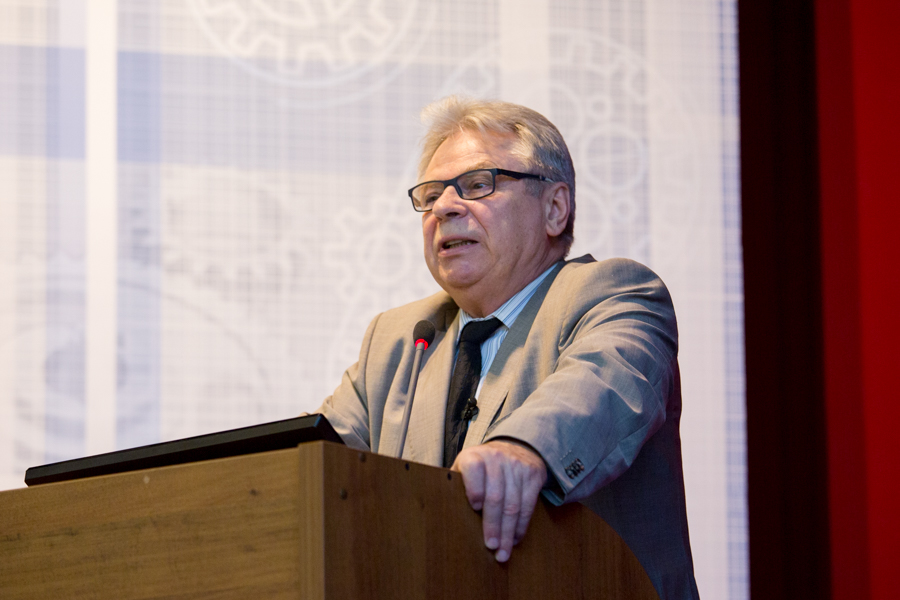
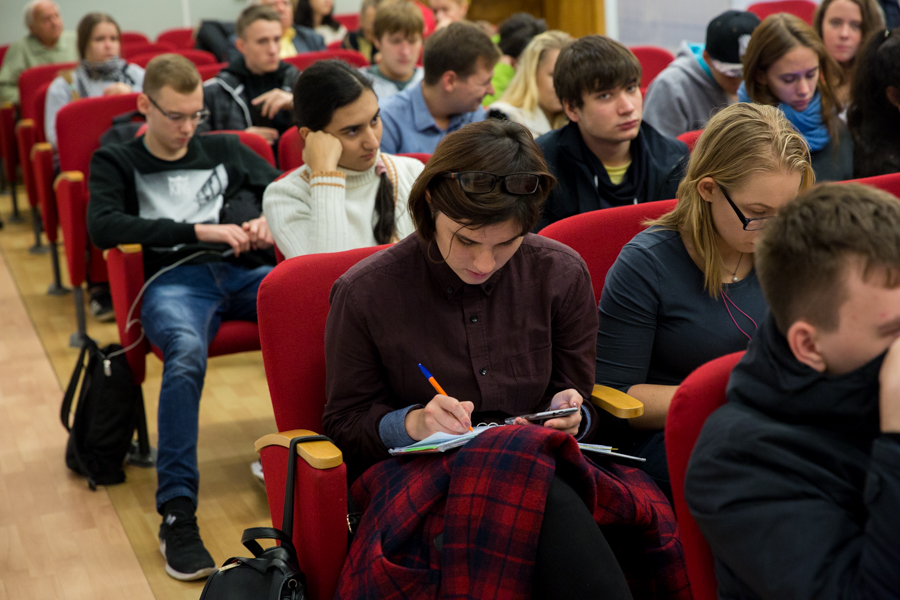
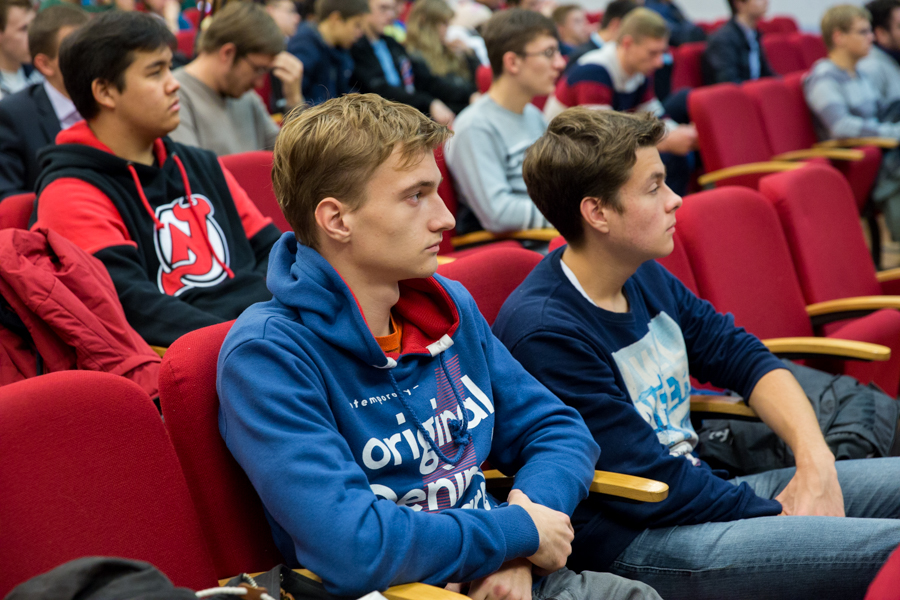
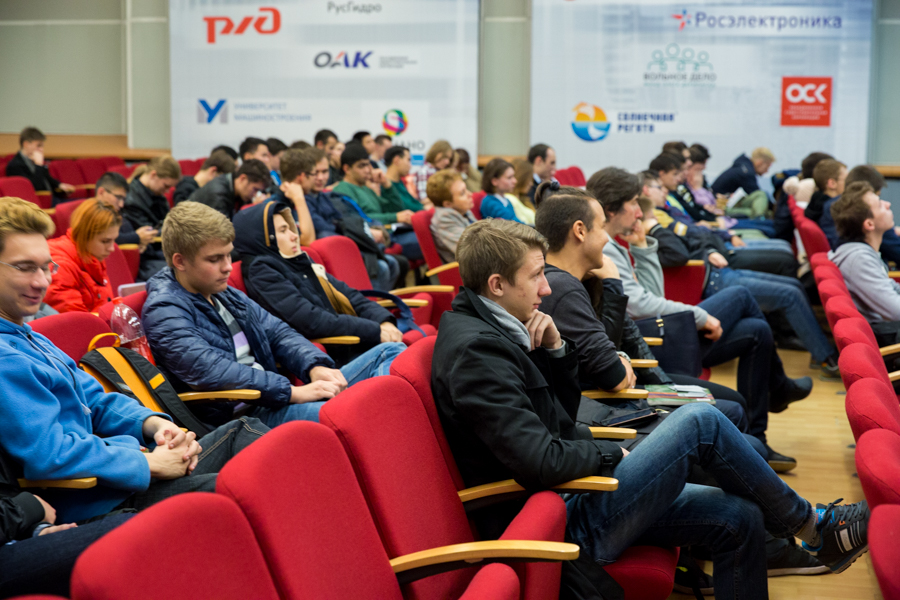
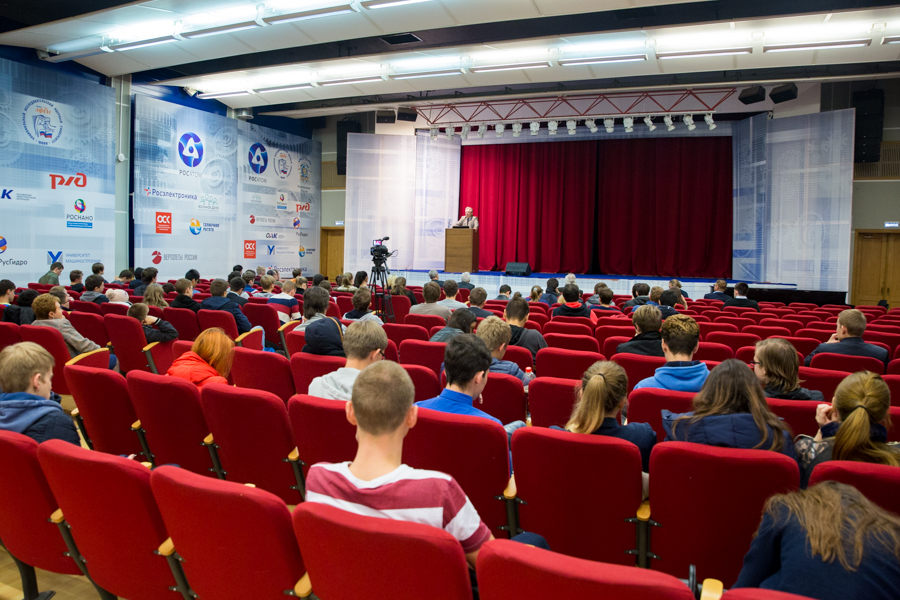
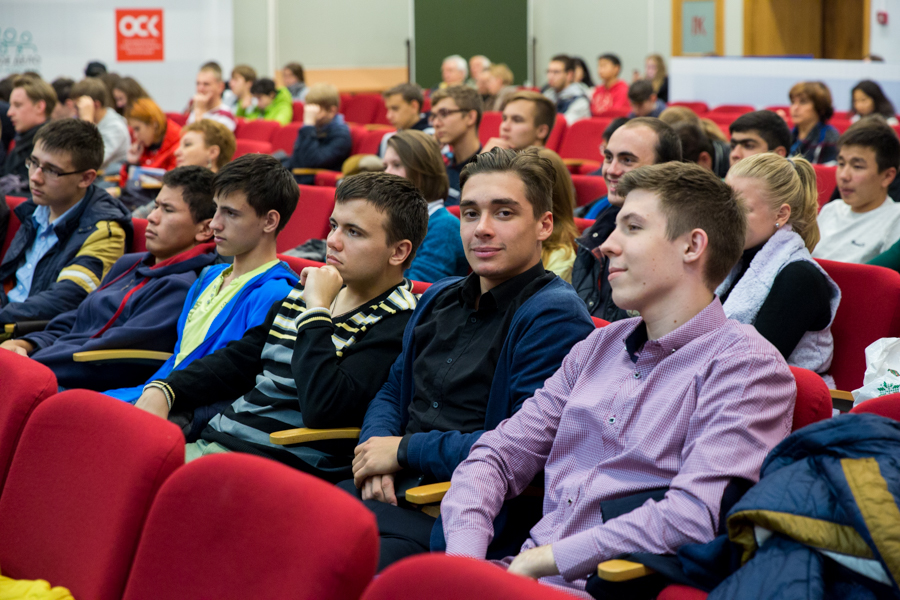
On September, 29 MEPhI students had an opportunity to learn about leading discoveries in the field of anthropology – science about human communities. Today anthropologists study a wide range of problems. Topics of research can cover both humanitarian and exact sciences. One of directions – ethnopolitics – is dedicated to studying of the role of ethnicity in political processes. The leading specialist in this field is an outstanding scientist, academician-secretary of the RAS Presidium, MEPhI Professor Valeriy Tishkov.
In his lecture “Who are WE?” Valeriy Tishkov proposed students to think about the questions: why are people all over the world different, and which differences are inborn, and which are dictated by the surrounding society?
The appearance (race differences), the place of living or material culture (for example, a famous “ethnographic triad”: food, clothes, place of living) allowed scientists to designate a person as some people. But in the modern world such differences are often constructs, i.e. they are formed in people’s heads. To define, who a concrete person is, to which people he refers it is important to find out, who he thinks he is. This is called self-consciousness, or identity. Valeriy Tishkov considers these concepts to be synonymous.
The questions of self-consciousness and identity are becoming more disputable today. How distinct can be borders between nations? May be, representatives of different ethnical groups differ even biologically? From the point of view of modern science, there’re such differences, but only among those, who lives aloof and has little contacts with other people. It would be right to speak about the influence of the natural environment on human societies. Meanwhile, as the lecturer said, “it is impossible to make a border between Russians and Ukrainians neither in genetics nor in anthropological type. The games around the biological component of the ethnicity are very current.”
So, the important are self-consciousness, language, and historical memory. They give a human an answer to the question “Who am I?”
Today anthropologists come to a conclusion that each of us is a combination of several identities: ethnical, religious, gender, professional etc. Identities make a hierarchy: from a small, local to a general civil. Nationality all over the world means citizenship.
So, we can easily answer the question “Who are WE?”, saying “Russian people”. It unites all the citizens of the Russian Federation.
The audience asked the questions, the most interesting of which referred to the enthnopolitical situation in Russia and in the world.
- Does an ethnical, local affiliation dominate the civil one?
- Not always. At the Olympic Games sportsmen said they fought for Russia, not for a separate region.
- What are the advantages and disadvantages of Russia’s plurality of nations?
- In general, the richness of cultures and traditions is a factor of successful development. But if there is bad management, it is always possible to provoke a conflict. If we want to save our country, we can’t drop someone.
- One of the reasons of the Soviet Union’s falling apart was the national question. Can such situation repeat?
- After the federal control of the country’s territory attempts to repeat the situation became fewer. In the outside world there is a desire to diminish Russia, thinking that Russia’s problem is that it’s too big.