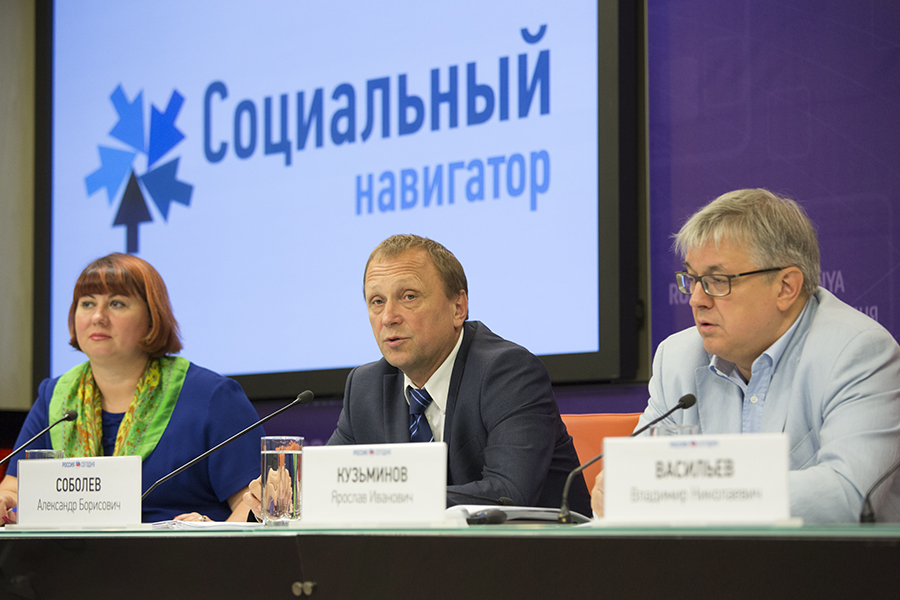
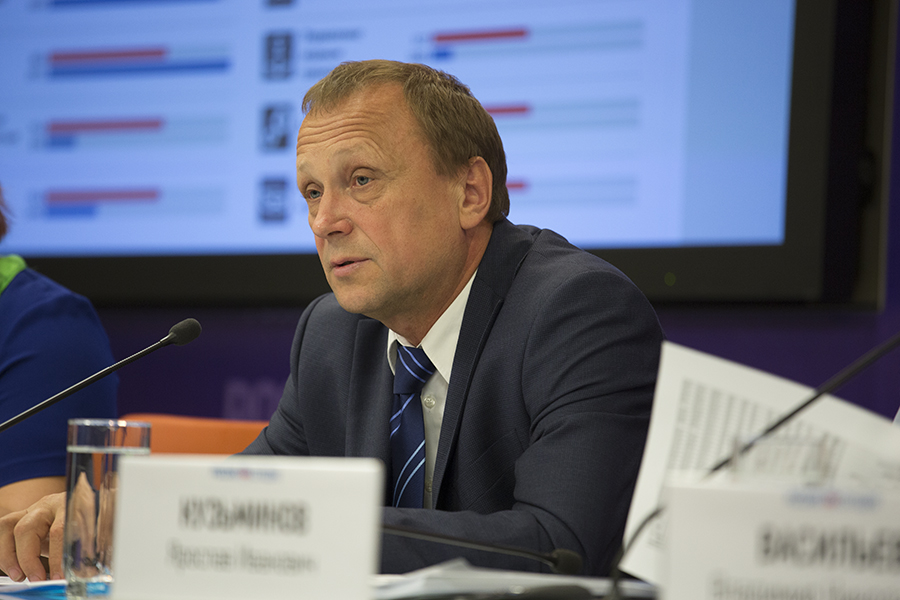
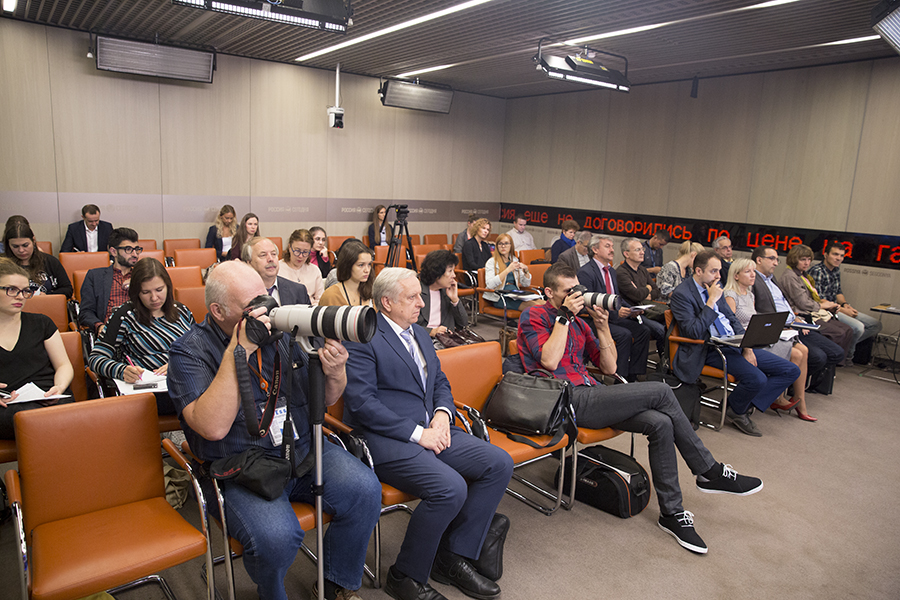
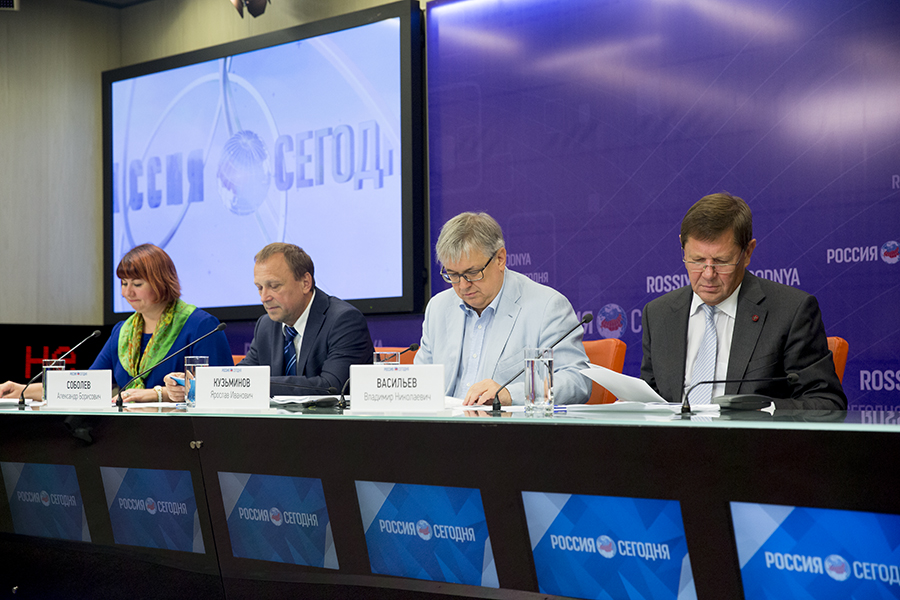
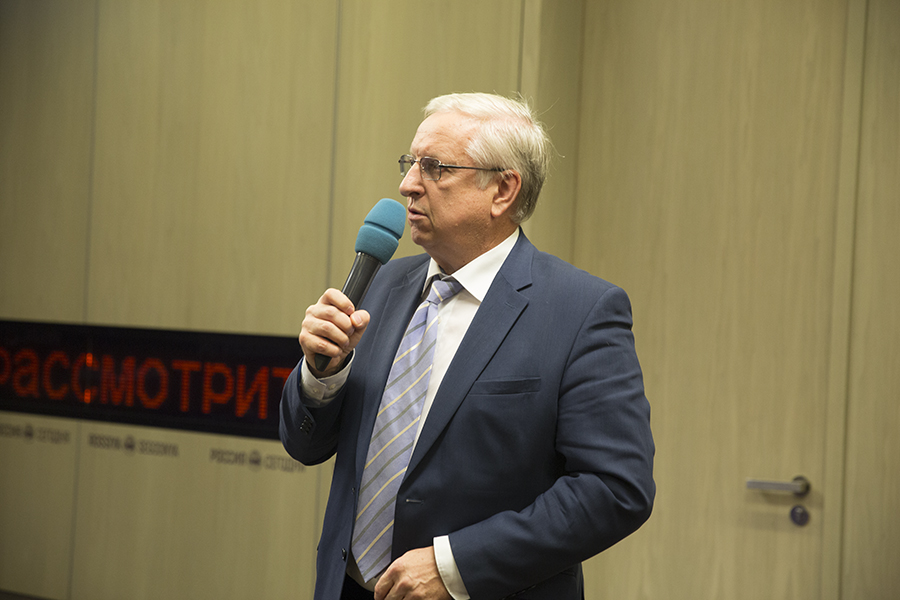
On September, 8 International multimedia press centre MIA “Rossiya Segodnya” held a press conference on topic “Quality of enrollment in state univeristies of the RF-2016”.
Head of the Department of state policy in higher education sphere of the Ministry of Education and Science of the RF Alexander Sobolev stressed the principal importance of the conducted monitoring, which allows see the picture of enrollees’ preferences and correct the policy on distribution of state-funded places for coming years.
He started the discussion of admission campaign results from the affordability of the higher education in the Russian Federation. For the past several years the Ministry of Education supports extremely high level of state funding for Bachelor’s and Specialist degree programs. Nearly 57 % of Russian schools graduates have a possibility to apply for state-funded places. This statistics is based on the prognoses of each personnel need of labour markets, the requests of key employers, the analysis of the employment of educational institutions graduates. “For example, this year and the next one we enhance state-funding for some specialisations, such as informational technologies, engineering, material sciences,” said the expert, claiming, that the quality of education remains one of the priorities.
Characterising the admission campaign of 2016, Alexander Sobolev highlighted individual achievements, shown by less than a half of enrollees. Most often it was the school certificate with honours – 42000, and more than 30000 applied with the certificate of the final essay. The essay was taken into account not only in humanitarian universities, but also in engineering ones. “I would recommend future graduates to study and know well their mother tongue,” he addressed school leavers.
This statement was confirmed by MEPhI First Pro-rector Oleg Nagornov, who, characterizing the results of university’s admission campaign, highlighted university’s support for gifted students, when not only results of graduate school years are taken into consideration, but also the ones of 8th-10th forms. He also drew the attention to the requirement strengthening to enrollees with special rights: their state exam scores should not be less than 75.
Those who achieved the maximum points came to leading universities (got 100 points at the state exam or won school contests). According to this indicator, MEPhI has become the third among leading universities, each third enrollee in the university had 100 points.
The results of the admission campaign showed the tendency of equalizing of the enrollment between engineering and economic and medical specialisations, characteristic for leading universities. This refers both to state-funding and non-state funding. Several universities, including MEPhI, have a minimum of 80+ for non-state funding students, which was impossible several years ago. For such students MEPhI sees growth from 76 to 77.4 points. In the quality of state-funding admission MEPhI shares 5-6 position with Lomonosov MSU, raising the average score up to 87.8 (8th place in 2015).
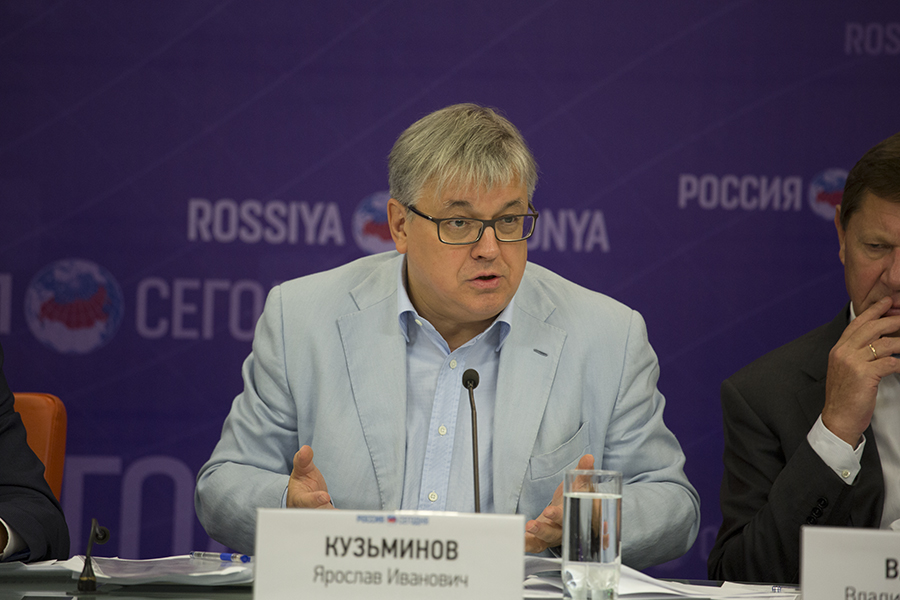
Press conference participants expressed their support to the ITMO and MEPhI initiative when they set the minimum points for non-state funding students, limiting the admission, but raising the quality. “This is a transfer to an absolutely new level, when in a group a non-state funding student differs from a state funding student only in 5 points. It’s another quality of education,” commented HSE rector Yaroslav Kuzminov.
MEPhI has become the leader in three directions of training: nuclear physics and technology, automatics and management, instrument engineering and optotechnics. The university position in the group plays significant role, because the majority of students choose direction at first, and then the institution.
Representative of the Ministry of Education and Science of the RF Alexander Sobolev has ponted out the fact that this year 22 Russian universities have entered the QS ranking which is twice more in comparison with the last three years.