A group of scientists from the National Research Nuclear University MEPhI and the Kurchatov Institute have developed the ATOM atomic tomograph to study the structure of materials at the atomic level and determine the chemical nature of the detected atoms.
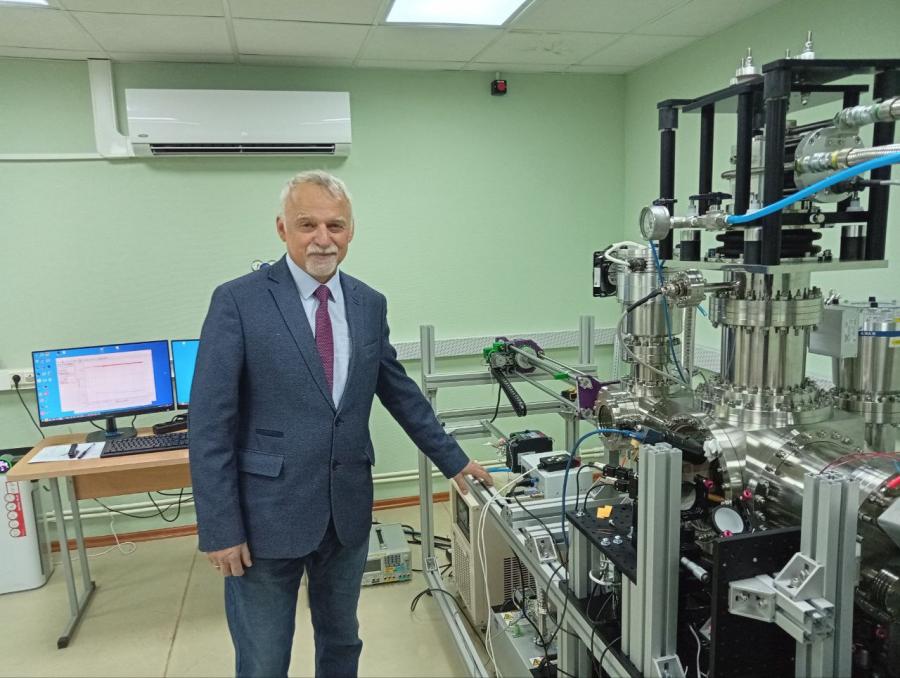
The device works like this: a small sample of material is placed in it – in fact, a "hair" with a diameter of 0.3-0.4 millimeters and a length of 15-20 millimeters – after which, using laser pulses, the sample begins to evaporate in nanoscopic portions – literally one or two atoms fit into each evaporated portion.
At the same time, the chemical composition of vaporized atoms is determined by mass spectroscopy methods. During the analysis, the sample is in a vacuum and cooled to about 20 Kelvin (i.e. minus 250 degrees Celsius).
The data obtained is processed on a computer, and the result is a three–dimensional map of the arrangement of atoms in the sample under study. Since making such a map may require determining the location of up to several hundred million atoms, as well as revealing the properties of many nanoscale objects, data processing takes place on powerful computers with a graphics processor.
"People have long realized that the properties of a material are determined not so much by its composition as by its structure. And in recent decades, it has been established that it is not just the structure, but the nanostructure that determines the properties of modern materials," says Sergey Rogozhkin, Professor at the Department of Physics of Extreme States of Matter at the National Research Nuclear University MEPhI. According to the expert, such studies are especially important for materials with a chemically complex composition, which may contain 10-20 components, and in which quantitatively insignificant impurities have a great influence on the final properties of a composite or alloy.
The developed installation is already ready to provide services to industrial partners in materials research, and in the future, the question may become about the mass production of such devices.
Currently, only one American company produces such devices in the world, however, in the current geopolitical situation, not only the supply of devices to Russia has been discontinued, but also the maintenance of previously purchased devices.
ATATOM is not inferior to its foreign counterparts in terms of quality, but it has two advantages: firstly, its production samples promise to be at least twice as cheap, and secondly, MEPhI is ready to develop devices with features that meet the special needs of customers (for example, with increased sensitivity to certain parameters). While the foreign manufacturer offers only standard products. Thus, in the future, the Russian device may become interested in the foreign market.
Sergey Rogozhkin notes that the first installation option was ready at the end of 2021, but after the introduction of international sanctions, the developers had to spend several more years to completely replace imported components. Thus, the resulting device fully complies with the principles of import substitution. "We have solved the problem of refining or creating device components on our own instrument base. One of the key things is a high–speed detector, we built it from scratch on Russian components, and now it is a completely Russian system. Now we can use many components from different manufacturers, and this does not limit us in the speed of creating the device," emphasizes Sergey Rogozhkin.
The developers have also created and patented software for both device control and mathematical processing of the received data.
The leading materials science centers of the Rosatom State Corporation, as well as large metallurgical and other industrial companies, need installations for atomic probe tomography. In particular, Rosatom requires such studies to determine the degree of radiation damage to nuclear reactor parts.