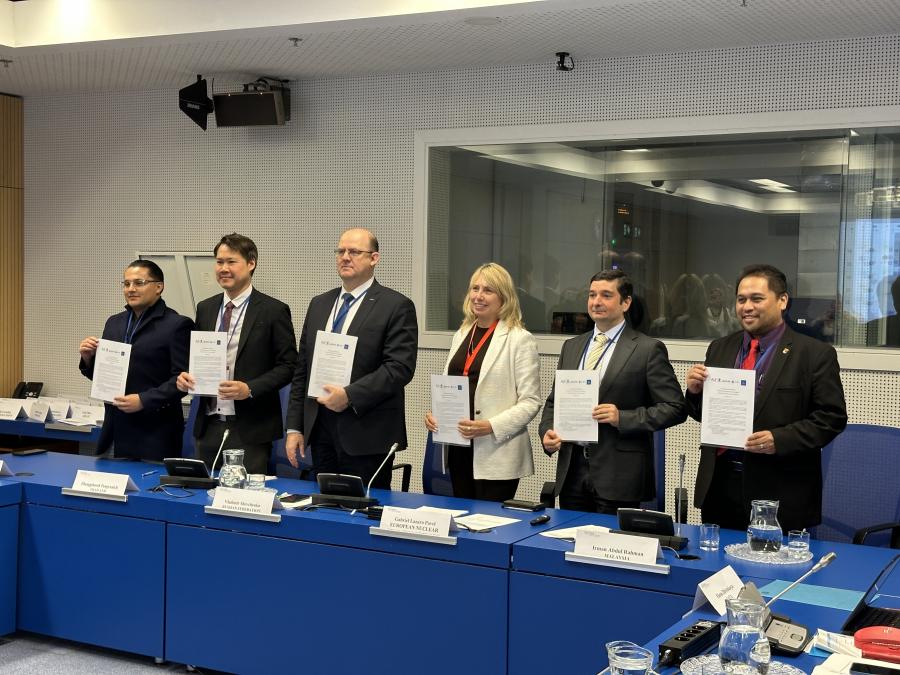
From December 8 to December 12, 2025, the IAEA, Vienna, Austria, hosts the annual technical meeting on educational networks, dedicated to cooperation and exchange of information on best practices in the field of nuclear education. The meeting brought together more than 120 participants from 60 countries, representing universities and organizations that train specialists in various fields of nuclear technology. On December 9, 2025, within the framework of the meeting, a cooperation agreement was signed between five international nuclear education networks: the Asian Network for Nuclear Technology Education (ANENT), the Latin American Network for Nuclear Technology Education (LANENT), the Regional Network for Education and Training of Nuclear Technology Specialists (STAR-NET), the European Network for Nuclear education (ENEN), as well as the International Academy of Nuclear Science and Technology (INSTA).

The signed agreement will make it possible to take full advantage of joint work, exchange of best practices, resources and opportunities to build the capacity of effective nuclear education. The cooperation of educational networks promotes the dissemination, management and preservation of nuclear knowledge and helps to ensure the training of highly qualified specialists for the safe and sustainable use of nuclear technologies.
On behalf of the STAR-NET network, the agreement was signed by Vladimir Shevchenko, Rector of the National Research Nuclear University MEPhI and President of STAR-NET.
On the first day of the meeting, Vladimir Shevchenko presented a report on the role and experience of MEPhI in training specialists for the nuclear industry in Russia and other countries. He noted that the National Research Nuclear University MEPhI is the leader of the Consortium of Flagship Universities of the State Atomic Energy Corporation Rosatom, which unites 22 leading universities in Russia. The central task of the consortium is the practical implementation of a unified educational space in the interests of the development of the nuclear industry, as well as the promotion of fundamental and applied scientific research at partner universities. Solving this problem requires close cooperation with industry enterprises and students' access to the appropriate infrastructure. Internships of undergraduate, graduate and young scientists at enterprises play an important role, along with the participation of employees of enterprises in teaching, as well as the implementation of joint research projects. Vladimir Shevchenko presented in detail to the audience the flagship project for the development of international nuclear education in Russia, Obninsk Tech, and invited universities participating in international nuclear education networks to participate in its implementation.
A special section was dedicated to the tenth anniversary of the regional STAR-NET network, which took place on December 9th. Vladimir Shevchenko, President of the network, Rector of MEPhI, Andrey Timoshchenko, Vice President of the network, Head of the Department of Nuclear Physics of the Belarusian State University, and Andrey Kosilov, Executive Director of the network, Professor of MEPhI, spoke about the activities of STAR-NET. They noted that the creation of educational networks under the auspices of the IAEA is a key element of a strategy to increase higher education opportunities and make effective use of existing resources. Educational networks facilitate the exchange of information and best practices between their members, ensure the reproduction of practices, and provide students with the opportunity to receive information from the best teachers and experts in special subjects.
Based on the ten years of experience of the STAR-NET network, it can be concluded that a key factor in the success of educational networks is the deep integration and interaction of educational institutions with enterprises of the nuclear industry.
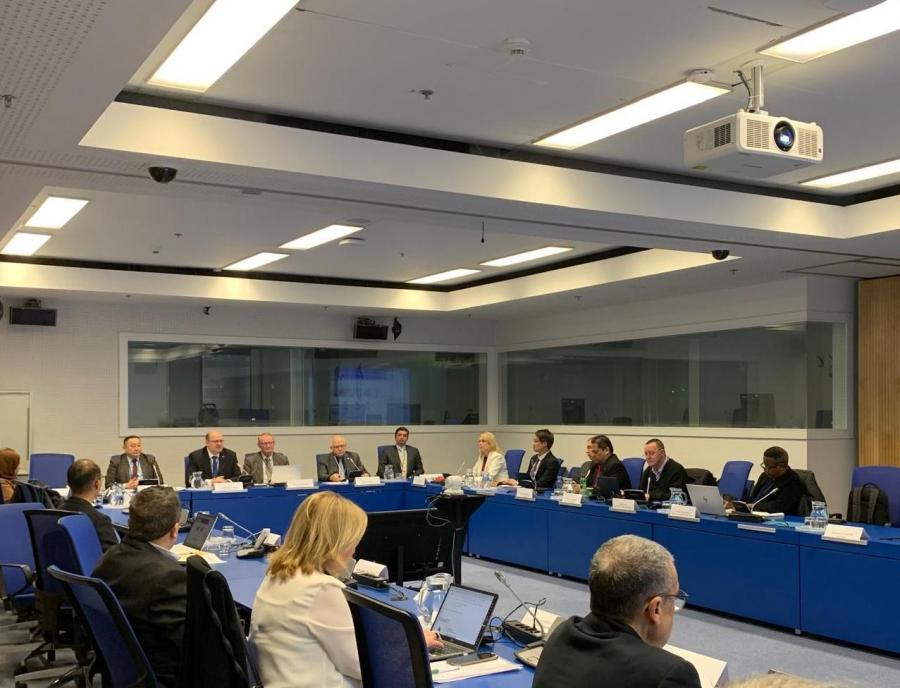
The speakers also informed the participants about the main events and projects implemented within the framework of the STAR-NET network. In particular, it was noted that the STAR-NET LMS educational platform plays an important role in organizing cooperation and implementing common educational objectives. The platform is supported and managed by the STAR-NET network and currently has more than 1,200 users from 18 countries. Partnerships between universities are developing, including internships for teachers and students, and joint events. In September 2023, a new cooperation agreement was signed between the IAEA and STAR-NET, and since 2023, the STAR-NET network has become an observer in the IAEA/INPRO project.