In the world of science there are two ways to research energy spectrum and contents of cosmic rays: “direct”, in which energy is measured and charge of primary particles out of atmosphere with the help of space vehicles or high-altitude balloons, and “indirect” – registration of offsprings’ fluxes, appearing when primary particles enter the atmosphere due to multiple nuclear and electromagnetic interactions of offsprings with nuclei and electrons of atmosphere atoms.
Researchers had no opportunity to make a direct study of cosmic rays out of atmosphere in the energy range of 1015 −1016 eV because of high costs and methodical complexity. That is why the only way of studying energy spectrum and contents of cosmic rays in that energy range is the research of giant air showers at ground-based installations.
The following peculiarities of energy spectrum have been detected in previous experiments: two failures (with energies of ~ 3*1015 and ~ 1017 eV) and its contraflexure (~ 5*1018 eV), and change of cosmic rays’ contents at first to the side of heavier nuclei, then to the side of lighter ones.
Nowadays there are a lot of models of physical interpretation of the failure. They can be roughly divided into “nuclear-physical” and “astrophysical”, but none of them gives full description of the experimental data which we have. The research of a neutron multiplier of giant air showers conducted in the NEVOD centre as a part of the Grant of the President of the RF for state support of young scientists is aimed at solving of energy spectrum failure problem.
Experimental data received at PRISMA-32 facility created in MEPhI together with the Institute for Nuclear Research of the RAS has been used to conduct the research.
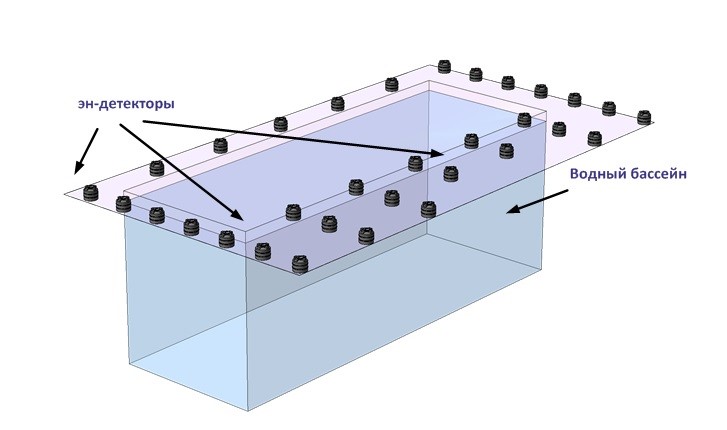
Fig.1. PRISMA-32 facility for the research of a neutron multiplier of giant air showers
The facility consists of 32 en-detectors placed in the NEVOD experimental complex. En-detector can register 2 main multipliers of giant air showers simultaneously: electromagnetic (e) under group transmission of charged particles and hadronic multiplier through registration of thermal neutrons (n). Its construction is similar to a usual giant air showers detector but with a thin non-organic scintillator, sensitive to thermal neutrons. Scintillator layer consists of allay of non-organic scintillator ZnS (Ag) and LiF, enriched up to 90% 6Li which is a very effective scintillator for registration of thermal and epithermal neutrons. Around 160000 photons are produced in it under neutron capture in reaction 6Li(n,a)t + 4.8 MeV. It allows to gather more than 50 photoelectrones from PMT photo cathode from n-capture under scintillator square of nearly 1 sq.m browsed by 1 multiplier photometer.
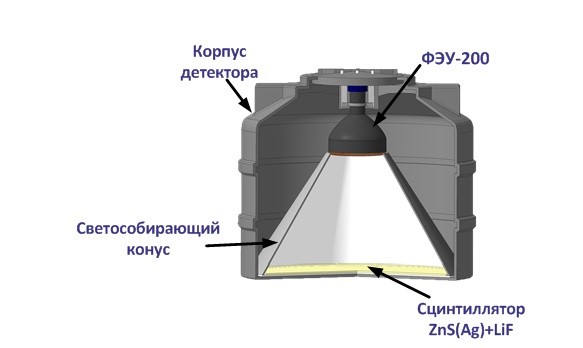
Fig.2. Detector for thermal neutrons’ registration
A facility created in MEPhI has allowed to obtain data about giant air showers’ neutron multiplier for the first time. The detectors and methods of registration of giant air showers’ neutron multiplier can be also used in applied tasks like studying of long-term variations of thermal neutrons’ flow and in systems of radiation control.
Materials from the extended abstract of Cand. of Phys.-Math. Sci. Dissertation of D.M. Gromushkin “A facility for registration of neutron multiplier of giant air showers” have been used in the press release.